
How to Audit Delivery Assurance for Home Appliance Hand Mixer & Immersion Blender Suppliers
How to Audit Delivery Assurance for Home Appliance Hand Mixer & Immersion Blender Suppliers
A delivery assurance audit for hand mixer and immersion blender suppliers is a structured verification that a supplier can repeat the same quantity, the same specification and the same shipment timing across consecutive orders. It is not a factory tour, and it is not a single sample test. The audit checks four evidence sets: motor and bill-of-materials (BOM) consistency, line-level production capacity, batch-to-batch quality records, and order-to-shipment milestone control.
This guide is written for importers, distributors, brand owners and private-label buyers who have already shortlisted a supplier and now need proof that the purchase order will arrive as agreed. Two SKUs are used as working examples throughout: the KM2143 hand mixer and the KM1195 immersion blender from DSP. The same framework applies to any hand mixer or immersion blender order, whatever brand name appears on the carton.
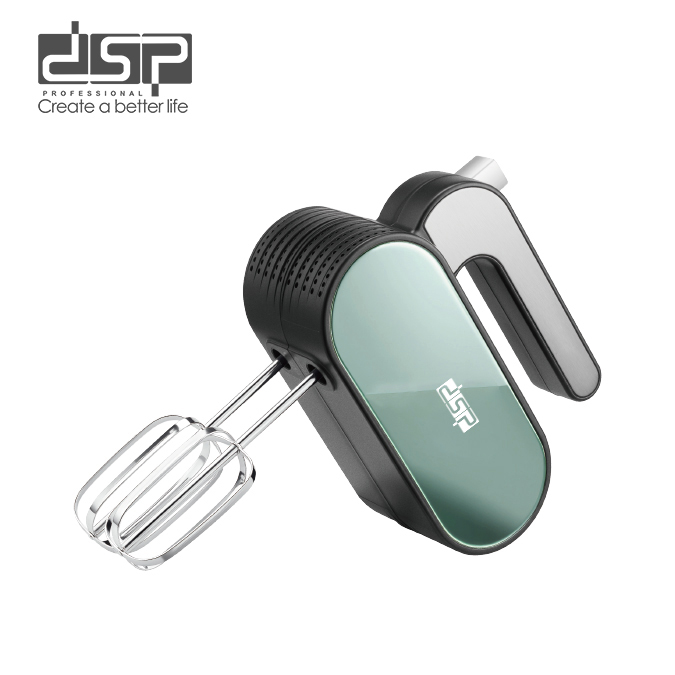
Hand mixer KM2143: a multi-material assembly with a copper motor, tempered glass shell, stainless steel trim and ABS body — every one of those parts has to be locked into the delivery specification. Image: DSP.
What a Delivery Assurance Audit Actually Verifies
Delivery assurance answers a narrower question than a general supplier audit. A capability audit asks whether a supplier can build a hand mixer or an immersion blender at all. A delivery assurance audit asks whether the supplier can build the approved version of that appliance, in the ordered quantity, on the promised date — and then repeat it next quarter.
That question resolves into three enforceable promises, and every audit step should generate evidence for at least one of them:
- Specification promise. Delivered units match the approved sample in motor model, rated power, speed control, housing material, food-contact material and accessory content.
- Quantity promise. The order holds a real production slot instead of competing with other appliance categories for the same line time.
- Timing promise. Material readiness, production, inspection, packing and shipment booking are tracked as dated milestones rather than compressed into one estimated delivery date.
The deliverable is a signed delivery specification, an evidence file and a scorecard. None of the three can be replaced by a purchase order sent on trust.
Why Delivery Assurance Breaks Down on Hand Mixers and Immersion Blenders
Hand mixers and immersion blenders are low-value products with a disproportionately complex component chain. Five characteristics make delivery drift more likely than in simpler appliance categories.
1. The motor is a purchased component
The KM2143 hand mixer runs on a 5525 pure copper motor rated at 250W. The KM1195 immersion blender uses a DC5512 pure copper motor running at 16500 RPM. Motors are sourced rather than built on the assembly line, so motor availability, cost movement and informal substitution all sit directly on the delivery critical path. A supplier that accepts “equivalent motor” wording in the specification has already removed delivery assurance.
2. The BOM spans several material suppliers
The KM2143 combines tempered glass, stainless steel and ABS. The KM1195 combines a SUS430 panel, a SUS304 stirring bar, ABS and PP. Each material family is a separate sub-supplier with its own lead time, so a shipment can be officially “in production” while one housing material is still outstanding.
3. Accessories decide whether the shipment is complete
The KM2143 ships with two 180±5 mm egg beaters and two 180±5 mm dough hooks. The KM1195 ships with a detachable 304 stainless steel stirring bar. Missing accessories are one of the most common causes of a partial shipment that still passes a casual visual check at the factory gate.
4. Control electronics add a second specification surface
The KM2143 uses five speeds with a turbo function, one-click acceleration and an eject button. The KM1195 uses electronic touch control with six speeds, an LED display, a metal bearing and a safety lock. Control boards are firmware- and supplier-dependent, so speed behaviour can drift between batches even when the housing looks identical.
5. Duty cycle and safety features must survive the shipment
Both appliance types are specified for intermittent operation in household kitchen conditions, with food-grade materials and overheat protection as standard application requirements. If a batch arrives with a substituted thermostat or a different food-contact plastic, the units can pass an unboxing check and still fail in the market.
Industry Background: Delivery Assurance as a Selection Criterion
The category is large enough that supplier choice is no longer only a price decision. Grand View Research estimated the global household appliances market at USD 461.69 billion in 2024, and Fortune Business Insights projects the global small domestic appliances market to reach USD 222.52 billion by 2026 at a CAGR of 4.92%. Grand View Research valued the small kitchen appliances segment at USD 39.6 billion in 2025.
Those figures explain a structural reality of sourcing: buyers rarely purchase one SKU from one factory. A supplier such as DSP (Yiwu DSP Electric Appliance Co., Ltd.), a home appliance supplier founded in 2006 in Yiwu, China, runs a portfolio spanning vacuum, oven, microwave, coffee machine, toaster, blender, mixer, air fryer, food processor, cooker, washing machine, cleaner, pan, hair clipper, hair shaver and beauty products. Portfolio breadth is convenient for consolidation, but it also means that a mixer order competes for line time, motors and inspection capacity against other categories.
DSP reports a 20,000 m² factory, 130 employees, an annual output of 5,000,000 units and a 30-engineer R&D team, with a 100% export ratio across North America, South America, Europe, Asia, Africa, Oceania and the Middle East. This is exactly the profile where a delivery audit earns its keep: capacity exists, but it has to be allocated and traced at SKU level.
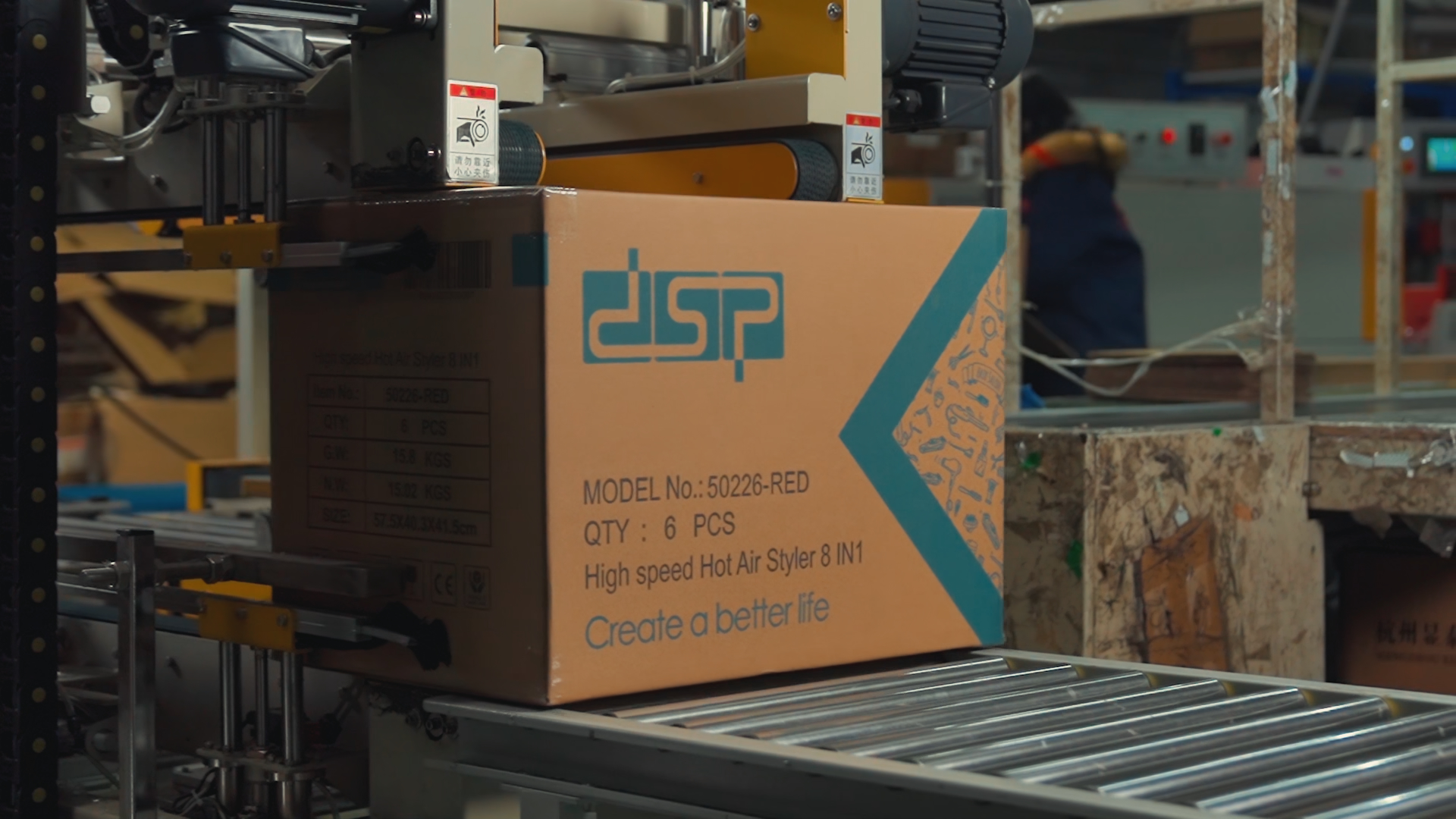
Capacity evidence should come from the line that will run the order, not from a portfolio-wide output figure. Image: DSP production workshop.
The Five-Pillar Delivery Assurance Framework
Pillar 1 — Capacity allocation, not headline capacity
An annual output figure covers every category a supplier produces. The audit must convert it into the capacity reserved for hand mixers and immersion blenders: number of assembly lines, monthly output by model, tooling and mould count, and the seasonal load pattern that precedes the buyer's shipment window.
Pillar 2 — Specification lock at part level
The approved specification should name the motor model, rated power, voltage and frequency, speed count, control type, housing material, food-contact material, accessory list with quantities, and packaging. For the KM2143 that means 220–240V 50/60Hz, 250W, 5525 pure copper motor, five speeds plus turbo, tempered glass shell, and the two-beater plus two-dough-hook accessory set. For the KM1195 it means 220–240V 50–60Hz, 500W, DC5512 pure copper motor, 16500 RPM, SUS430 panel with SUS304 stirring bar, six-speed electronic touch control, LED display, metal bearing and safety lock.
Pillar 3 — Process quality consistency across batches
Consistency is proven with records, not with a walk-through. The audit should trace the same checks across at least three production batches: incoming motor and material inspection, in-process assembly checks, end-of-line functional testing of every speed step plus turbo and eject functions, and pre-shipment inspection with the approved sample placed beside the carton.
Pillar 4 — Milestone control from order to booking
Delivery reliability is a scheduling discipline. Each order should carry dated milestones: specification freeze, material readiness, production start, production finish, inspection, packing, booking confirmation and document release. A supplier that can only offer a single delivery date has no visible control point for the buyer to check.
Pillar 5 — Documentation, packing and traceability
Export-only suppliers ship into multiple regions, so documentation quality is part of delivery assurance. The audit should confirm carton marks, model and batch coding, packing configuration, label language, the commercial documents that travel with the shipment, and the supplier's ability to retrieve the production record for a specific batch after arrival.
Step-by-Step Audit Process
Step 1 — Write the delivery specification before requesting a quotation
Price and lead time are meaningless until the specification is fixed. Build the document from the model data sheet, then add the delivery conditions the data sheet does not cover.
- Model, voltage and frequency confirmed (220–240V, 50/60Hz on both example SKUs)
- Motor model and rated power written as a locked item, with substitution prohibited without written approval
- Housing and food-contact materials named (tempered glass, stainless steel, ABS on the KM2143; SUS430, SUS304, ABS, PP on the KM1195)
- Accessory list with exact quantities and dimensions (two 180±5 mm beaters and two dough hooks; detachable 304 stirring bar)
- Speed behaviour defined (five speeds with turbo, one-click acceleration and eject button; six speeds with electronic touch control and LED display)
- Packing configuration, carton marks and label language fixed
- Inspection method, sampling approach and acceptance criteria agreed in writing
Step 2 — Convert headline capacity into SKU capacity
Ask for the production plan by model instead of the annual total. A supplier with a 5,000,000-unit annual output across fifteen-plus categories is a large supplier, but the number that matters to a mixer order is how many hand mixers and immersion blenders run each month, and how much of that capacity is already committed.
- Monthly output by model for the two SKUs being ordered
- Number of assembly lines, and whether mixer and blender lines are shared
- Tooling and mould count plus tooling maintenance schedule
- Committed capacity for the next two quarters
- Peak-season loading and how new orders are sequenced
Step 3 — Audit the motor and BOM at source
Motor and BOM checks carry the highest value in the audit because they are the hardest problems to detect after shipment.
- Motor nameplate and specification sheet match the approved model (5525 for the KM2143; DC5512 for the KM1195)
- Copper winding confirmed against the declared pure copper motor construction
- Motor supplier named, with a documented approved-alternate procedure
- Housing and food-contact materials verified against the signed BOM (tempered glass, stainless steel, ABS, PP, SUS304, SUS430)
- Thermostat and overheat protection components specified and unchanged
- Accessory dimensions verified with a gauge (180±5 mm beaters and dough hooks)
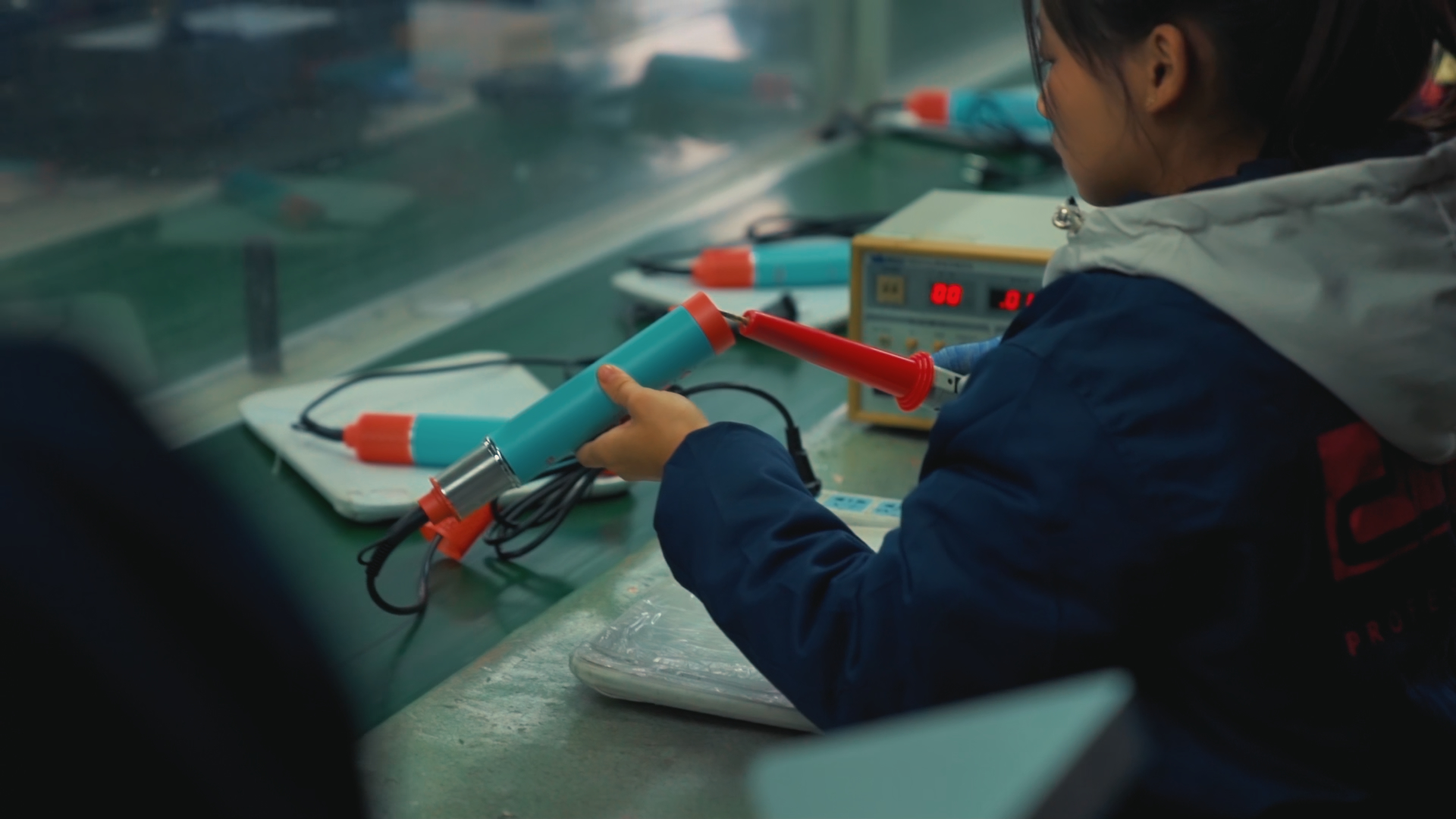
Motor and BOM verification belongs on the line where the order will actually be built. Image: DSP production workshop.
Step 4 — Review quality control gates and batch records
- Incoming inspection records for motors, plastics and steel parts
- In-process checks at assembly, wiring and final fitting
- End-of-line functional test covering every speed step, turbo, eject button or touch control response
- Safety checks for overheat protection and, on the KM1195, the safety lock
- Pre-shipment inspection report with photos taken against the sealed sample
- Non-conformity log showing how previous defects were closed
- Traceability from batch code to production date and line
Step 5 — Run a milestone-controlled trial order
A trial order is the only place where the timing promise is genuinely tested. Treat it as an audit instrument rather than a small purchase.
- Specification freeze confirmed in writing before production starts
- Material readiness confirmed against the BOM, including motors and accessories
- Production start and finish dates recorded against the plan
- Pre-shipment inspection completed before packing
- Packing and carton marks approved from photos
- Booking confirmation and full document set issued before departure
- Arrival check covering quantity, model mix, accessories and packaging condition
Step 6 — Score the result and set the review cadence
Score each pillar separately so that a strong factory cannot hide a weak schedule, and a good schedule cannot hide an unlocked motor specification. Then decide: approve, approve with conditions, or reject. A conditional approval should name the specific evidence required before volume is released.
Red Flags That Should Stop an Order
- The motor is described only by power rating, with no model designation or with “equivalent” substitution permitted
- Speed count, control type or accessory quantity differs between the sample and the specification sheet
- Headline annual output is quoted with no SKU-level production plan
- No batch records exist, or records stop at final inspection
- Specification changes are communicated verbally or after production has started
- Housing or food-contact material is changed without written approval
- The delivery date is confirmed before material readiness is verified
- Carton marks and label language are left open until shipment day
- Inspection is offered only at pre-shipment, with no in-process checks
Use Cases: How the Audit Changes by Buyer Type
Importer launching a hand mixer line
A first-time importer usually starts with one hand mixer SKU. The KM2143 is a useful benchmark because its five-speed turbo control, tempered glass shell and two-beater plus two-dough-hook accessory set give the audit several checkable surfaces. Priority: motor lock and accessory completeness, because both are inexpensive to verify and costly to correct after arrival.
Brand owner adding an immersion blender
Adding an immersion blender such as the KM1195 brings electronic touch control, a six-speed interface, an LED display and a safety lock into the approval scope. Priority: control board consistency between batches, plus confirmation that the detachable SUS304 stirring bar is present and dimensionally correct in every unit.
Distributor replenishing a multi-category catalogue
Distributors buying mixers, blenders, air fryers, toasters and other categories from one supplier face scheduling competition rather than capability gaps. Priority: SKU-level capacity allocation and a milestone calendar that shows where the mixer order sits relative to the rest of the programme.
Comparison: What Each Audit Artifact Proves
| Evidence to request | What it proves | Where it is checked |
|---|---|---|
| Motor nameplate and winding declaration | Delivered motor matches the approved model (5525 on the KM2143; DC5512 on the KM1195) | Incoming inspection and line side |
| Signed BOM with material names | Housing and food-contact materials are frozen (tempered glass, stainless steel, ABS, PP, SUS304, SUS430) | Specification sheet against the sealed sample |
| Line-level capacity statement | The order holds real production time rather than a share of a portfolio total | Production planning review |
| Batch quality records | Consistency across consecutive runs, not one good batch | Quality control file |
| Trial order milestone log | Timing reliability from material readiness to booking | Order confirmation through shipment |
| Approved packaging and carton marks | The shipment will not stall at packing or documentation stage | Pre-shipment inspection |
Product Baseline: Hand Mixer KM2143 vs Immersion Blender KM1195
The two example SKUs differ in ways that change the audit checklist item by item. The table below uses published model specifications.
| Audit dimension | Hand Mixer KM2143 | Immersion Blender KM1195 |
|---|---|---|
| Motor | 5525 pure copper motor, 250W | DC5512 pure copper motor, 500W, 16500 RPM |
| Speed control | 5 speeds, turbo function, one-click acceleration, eject button | 6 speeds, electronic touch control, LED display |
| Housing and contact materials | Tempered glass, stainless steel, ABS | SUS430 panel, SUS304 stirring bar, ABS, PP |
| Key mechanical features | Tempered glass shell: high temperature resistant, impact resistant, easy to clean | Detachable 304 stainless steel stirring bar, 304 four-leaf blades, metal bearing, safety lock |
| Accessories | 180±5 mm egg beater ×2, 180±5 mm dough hook ×2 | Detachable 304 stainless steel stirring bar |
| Rated supply | 220–240V~ 50/60Hz | 220–240V~ 50–60Hz |
| Audit priority | Motor lock and accessory completeness | Control board consistency and blade assembly |

The KM1195 immersion blender adds electronic touch control and a detachable SUS304 stirring bar to the audit scope. Image: DSP.
FAQ
Which documents should be part of a delivery assurance audit for hand mixers and immersion blenders?
A signed model specification, a BOM listing housing and food-contact materials, declarations covering food-grade materials and overheat protection, and the test reports required by the destination market. The audit should confirm that the documents describe the batch being shipped — the SUS304 stirring bar on the KM1195, the tempered glass shell of the KM2143, the safety lock, the thermostat — rather than simply checking that a document folder exists.
Is a supplier's annual output figure enough to judge delivery capability?
No. Annual output is a portfolio figure. DSP reports 5,000,000 units a year across a range that includes mixers, blenders, air fryers, toasters, cookers and personal care appliances, produced in a 20,000 m² factory with 130 employees. That establishes scale, but a mixer order still needs the model-level monthly plan, the line allocation and the tooling count before capacity can be treated as reserved.
What drives the cost of running a delivery assurance audit?
The main cost drivers are sample units, third-party inspection, travel if the audit is performed on site, and internal time for specification writing and milestone tracking. Scope discipline keeps the cost proportionate: audit one hand mixer and one immersion blender SKU first, then reuse the approved specification and evidence file for adjacent models. The audit is cheaper than a shipment that fails inspection or arrives with substituted motors.
How should samples be used in a delivery assurance audit?
Treat the approved sample as the reference standard. Seal one unit, record motor model, rated power, speed behaviour and accessory content, then compare production against it. For the KM2143, record the five speeds, the turbo and eject functions, the tempered glass shell and both accessory pairs; for the KM1195, record the six-speed touch control, LED display response, safety lock and detachable 304 stirring bar.
How can a buyer verify lead time reliability before committing volume?
Use a milestone-controlled trial order and require evidence at each stage: specification freeze, material readiness, production start and finish, pre-shipment inspection, packing approval and booking confirmation. Compare planned against actual dates, then set the review cadence for the volume order. Buyers who want to begin that process with DSP can request samples, the product catalogue and a quotation through the DSP team — Maggie, sales-3@dsplife.cn, WhatsApp +86 13958409699, or the official website at dsp-official.com.
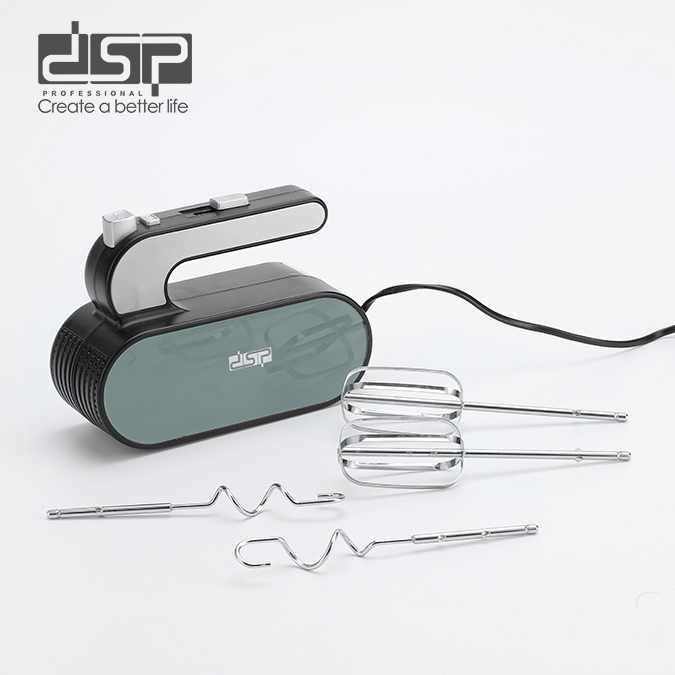
Accessory set and housing are the two items most often left vague in a delivery specification. Image: DSP.
Conclusion
A hand mixer or immersion blender order fails for predictable reasons: the motor changed, an accessory went missing, the housing material was swapped, one batch was good and the next was not, or the delivery date was confirmed before the materials existed. A delivery assurance audit exists to close those gaps before money moves.
Work through the five pillars in order — capacity allocation, specification lock, batch consistency, milestone control and documentation — and require evidence rather than assurances at each step. The framework costs a few days of preparation per SKU and protects the entire reorder cycle that follows.
Next Step: Request Samples and a Delivery Plan
DSP (Yiwu DSP Electric Appliance Co., Ltd.) supplies hand mixers, immersion blenders and a broad home appliance portfolio to buyers in North America, South America, Europe, Asia, Africa, Oceania and the Middle East. Request the model data sheet, a sealed sample of the KM2143 hand mixer or KM1195 immersion blender, and a milestone-based delivery plan for your order.
Contact: Maggie | Email: sales-3@dsplife.cn | WhatsApp: +86 13958409699 | Website: www.dsp-official.com
Download the product catalogue: DSP Home Appliances Brochure (PDF)
Have Questions or Need More Details?
Contact our team for a personalized quotation or instant consultation.
Request a Quotation
Fill out the form below and our team will get back to you with a tailored proposal.
WhatsApp Direct Chat
Prefer to chat in real-time? Message us on WhatsApp for instant assistance & quick answers.
- Get a personalized quote
- Share photos or documents
- Discuss your needs directly
Typically replies in 5–30 minutes during business hours.