
Mixer Motor Specs: How to Read Wattage and Speed Controls
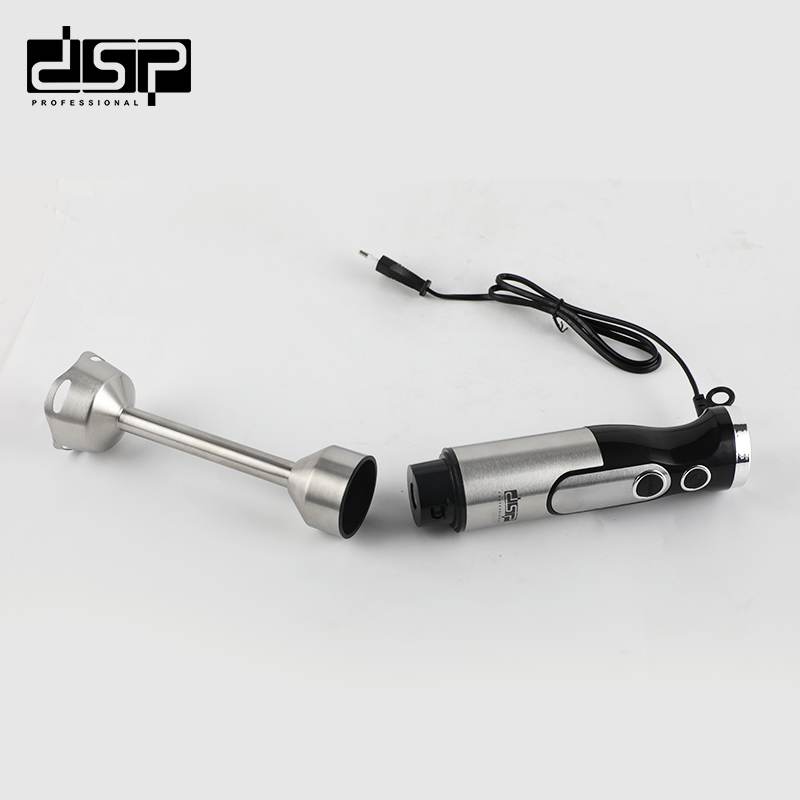
Two mixers can carry the same wattage rating and still behave completely differently in the bowl. In the DSP mixer line, two 500W immersion blenders use different motors and different speed systems: the KM1142 runs a 7712 DC full copper motor with a variable speed regulator, while the KM1149 runs a 5712 full copper motor with 2-speed control. Same headline number, different mechanical behaviour.
This article explains how to read mixer motor specifications in the order that actually affects results — motor construction first, rated power second, speed control architecture third — and then how to match those specifications to specific dough and batter tasks. Every figure below is a published specification from the DSP mixer range.
Why Mixer Specification Sheets Are Hard to Compare
Most mixer specification sheets lead with one electrical number: power. That single number does not answer the questions a buyer actually asks. Will this unit handle a stiff bread dough or stall halfway through? Is the speed control fine enough to avoid splashing when whipping cream? Do the additional speed settings still mean anything once the mixture gets thick?
Three structural reasons explain the gap between a wattage figure and real mixing performance.
- Rated power describes electrical input, not mechanical output. The torque that reaches the ingredients depends on motor type, transmission, and the geometry of the beater or dough hook. A 200W hand mixer with a 4515 motor and a 1500W immersion mixer with an 8112 motor are not describing the same kind of load.
- Speed count is not speed quality. A 2-speed unit with a variable speed control function can offer more usable range than a fixed 5-speed unit. The KM1141 stand mixer lists 2 speeds and also lists variable speed control; the KM2064 hand mixer lists 5 speeds with turbo. These are different control philosophies, not different quantities of the same thing.
- Hand mixers and stand mixers sit in different duty classes. Several DSP hand mixers are specified for intermittent operation, while the dough mixers are specified for batch processing with bowl locks and safety guards. Duty class is a specification, and it is usually the one missing from a short product listing.
Industry Background: Motor Types and Control Systems in Small Appliances
Small domestic appliances remain a steady category globally. Third-party market research projects the global small domestic appliances market to reach USD 222.52 billion by 2026, growing at a CAGR of 4.92% (Fortune Business Insights). Within that market, the motor and control system of a mixer are the two components that most directly separate an entry-level unit from a professional-grade one.
Motor construction is described in three standard ways across the category, and DSP mixer specifications use those same terms:
- Full copper motor / pure copper motor — windings are copper.
- Copper clad aluminum motor — windings use an aluminium core with a copper cladding.
- DC motor — a direct-current motor, commonly used where compact size and fast speed response matter.
Both constructions appear in the DSP mixer range, and they appear in different product classes. Hand mixers and immersion blenders — models including KM2135, KM2064, KM2091, KM1153, KM1091, KM1197, KM1117, KM1142, KM1152, KM1171, KM1194, KM1170, KM1150 and KM1149 — use full copper or pure copper motors across motor codes such as 4515, 4530, 5525, 5624, 5712, 7712, 7812, 7912 and 8112. The stand dough mixers use a different class: the KM3057 carries an 8840AC copper clad aluminum motor and the KM3043/KM3043A carries an AC8825 copper clad aluminum motor.
Motor codes such as 5712 or 9812 are supplier-side identifiers rather than a universal standard. They are useful for comparing models inside one manufacturer's range, but they should not be read as an industry-wide rating.
The second variable is the speed control system. Across the DSP mixer range, the following control types appear:
- Fixed speed steps, such as 2 speeds or 5 speeds
- Variable speed control and stepless speed change
- Touch speed switches with 2 touch speeds
- Turbo function
- Pulse function
- Rotary switch with 8 speed positions
- Digital display with multiple adjustable speeds
How to Read the Three Core Mixer Motor Specifications
1. Rated Power (Wattage)
Wattage is the widest-ranging specification on a mixer sheet. In the DSP mixer range it runs from 200W to 1600W, and the band a mixer sits in says more about its intended task than almost anything else.
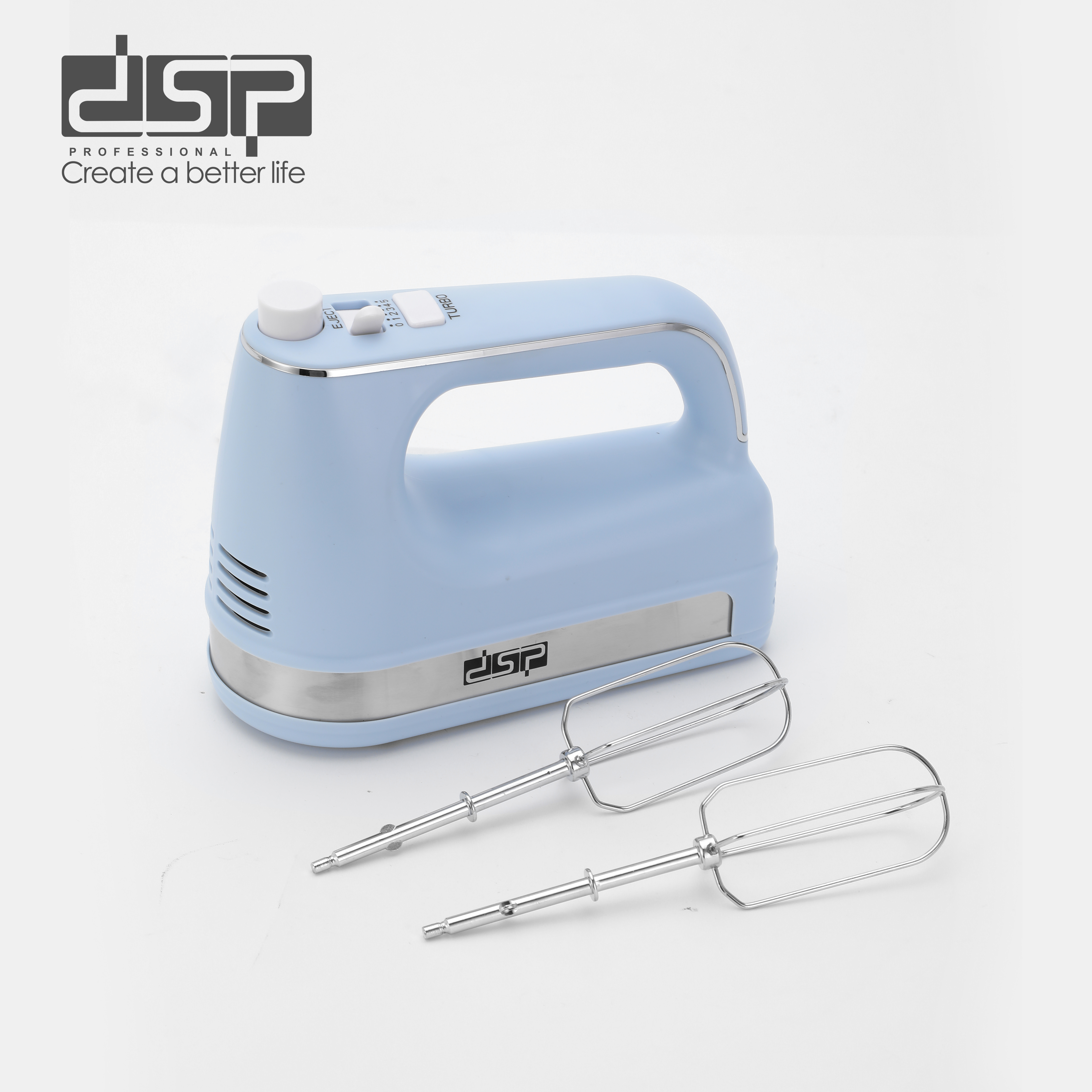
The 200W band covers DSP hand mixers KM2135, KM2091 and the KM1072 immersion blender. These are intermittent-use units built for egg whites, light batters and cream. Two of the three offer 5 adjustable speeds; the KM1072 is a single-speed blending rod.
The 300W to 1000W band is the widest and the most varied. The KM2064 hand mixer is rated 300W with a 4530 full copper motor and 5 speeds with turbo. The KM1171 immersion mixer is rated 400W with a DC 5624 pure copper motor and variable speed control. The KM1142 and KM1149 immersion blenders are both rated 500W. The KM1091 and KM1117 are rated 700W. The KM1152 food mixer and hand blender is rated 800W with a turbo function and a variable speed regulator. The KM1153 hand mixer, the KM1150 immersion blender and the KM1170 immersion blender are all rated 1000W.
The 1200W to 1600W band is where dough work begins. The KM3043/KM3043A stand dough mixer is rated 1200W. The KM1141 stand mixer and food blender, the KM1194 hand mixer and the KM1197 immersion blender are all rated 1500W. The KM3057 planetary dough mixer is rated 1600W.
2. Motor Construction and Code
When a mixer is described as full copper or pure copper, the specification refers to winding material rather than physical motor size. The distinction that separates product classes most clearly in the DSP range is DC versus AC, and copper versus copper-clad-aluminium.
- KM1141 stand mixer: 9812 full copper DC motor
- KM1194 hand mixer: DC7912 pure copper motor, rotating speed 15000RPM ±15%
- KM1197 immersion blender: 8112 pure copper motor, rotating speed 15500 RPM
- KM1170 immersion blender: DC 8112 pure copper motor
- KM1171 immersion mixer: DC 5624 pure copper motor
- KM1091 immersion blender: 5712 full copper DC motor
- KM1142 immersion blender: 7712 DC full copper motor
- KM1117 immersion mixer: DC 7712 full copper motor
- KM1150 immersion blender: 7812 all-copper motor
- KM1153 hand mixer: 7912 pure copper motor
- KM2135 hand mixer: 4515 motor
- KM2064 hand mixer: 4530 full copper motor
- KM2091 hand mixer: 5525 full copper motor
- KM1072 immersion blender: 5415 pure copper motor
- KM3057 planetary dough mixer: 8840AC copper clad aluminum motor
- KM3043/KM3043A dough mixer: AC8825 copper clad aluminum motor
The pattern is consistent across the range. DC copper-wound motors dominate the hand-held products, where compactness and speed response matter. Copper clad aluminium motors appear in the two stand dough mixers, where sustained torque delivery over a batch cycle is the primary requirement.
3. Speed Control Architecture
Speed control is the specification most often misread, because the count of speeds and the type of speed control are two separate things.
- Fixed steps. The KM1141 stand mixer and the KM1153 hand mixer both list 2 speeds. The KM3057 dough mixer uses a rotary switch with 8 speed positions.
- Adjustable steps with an added function. The KM2135 hand mixer offers 5 speeds adjustable plus a one-click acceleration function and a turbo function, with an eject button for the beaters. The KM2091 hand mixer offers 5 speeds. The KM2064 offers 5 speeds with turbo. The KM1170 immersion blender offers 6 speeds adjustable with a digital display.
- Variable speed control added to fixed steps. The KM1141 stand mixer, the KM1153 hand mixer, the KM1194 hand mixer and the KM1152 food mixer all carry a variable speed control or variable speed regulator on top of their fixed steps.
- Stepless control. The KM1117 immersion mixer lists stepless speed change. The KM1142 lists a variable speed regulator. The KM1150 lists a variable speed regulator.
- Touch speed control. The KM1091 immersion blender uses a 2 touch speeds switch. The KM1197 uses a smart push button with variable speed control.
- Batch control for dough. The KM3043/KM3043A uses 6 speed plus pulse with a metal gear and a blue LED ring around the speed controller. The KM3057 uses a rotary switch with 8 speeds and a planetary rotation design.
A practical decision rule follows from this: progressive adjustment matters for delicate, low-viscosity tasks such as whipping cream or egg whites, while sustained torque and a pulse function matter more for dough, where the mixer is loaded continuously rather than accelerated gradually.
Step-by-Step: Matching Power to Dough and Batter Tasks
Step 1 — Define the load before the machine. Light batters, egg whites and cream are low-resistance loads. Bread dough, cookie dough and thick cake batter are high-resistance loads. The load category, not the recipe name, determines which wattage band is appropriate.
Step 2 — Map the load to a wattage band.
- Low resistance, intermittent home use: 200W to 300W hand mixers. The KM2135 (200W, 5 speeds, turbo, supplied with two 170mm chrome-plated egg beaters and two 170mm chrome-plated dough hooks), the KM2091 (200W, 5525 full copper motor, 5 speeds, 180mm egg beaters and 180mm dough mixer) and the KM2064 (300W, 4530 full copper motor, 5 speeds with turbo).
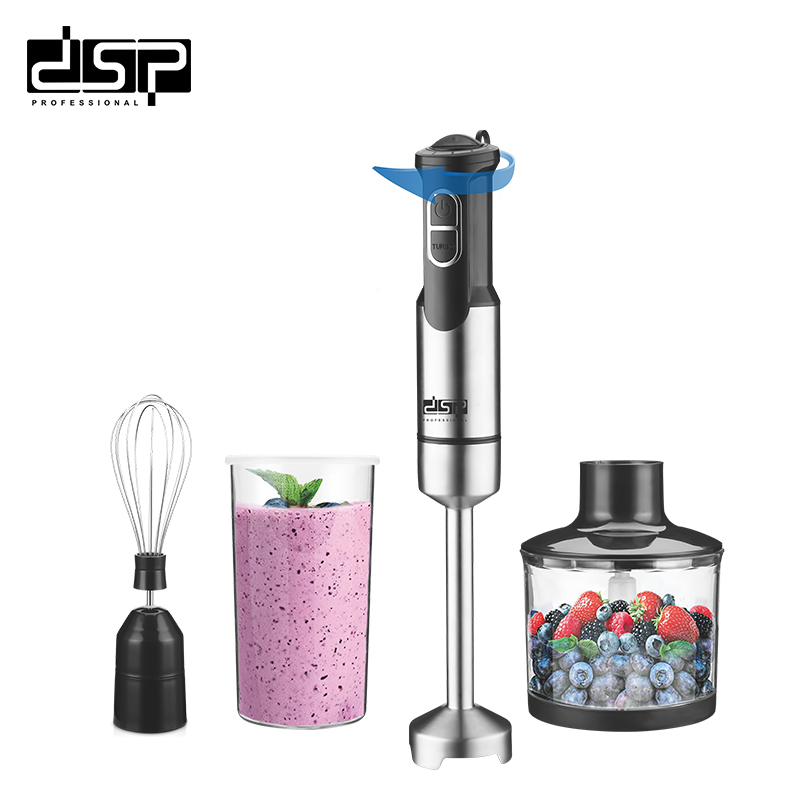
- Low to medium resistance, in-pot blending: 500W to 800W. The KM1142 (500W), the KM1149 (500W, 2-speed control), the KM1091 (700W, 5712 full copper DC motor, supplied with a 700ml cup, an S/S whisk and a 500ml plastic chopper), the KM1117 (700W, stepless speed change) and the KM1152 (800W, turbo function, 600ml cup, egg whisk and 500ml plastic chopper).
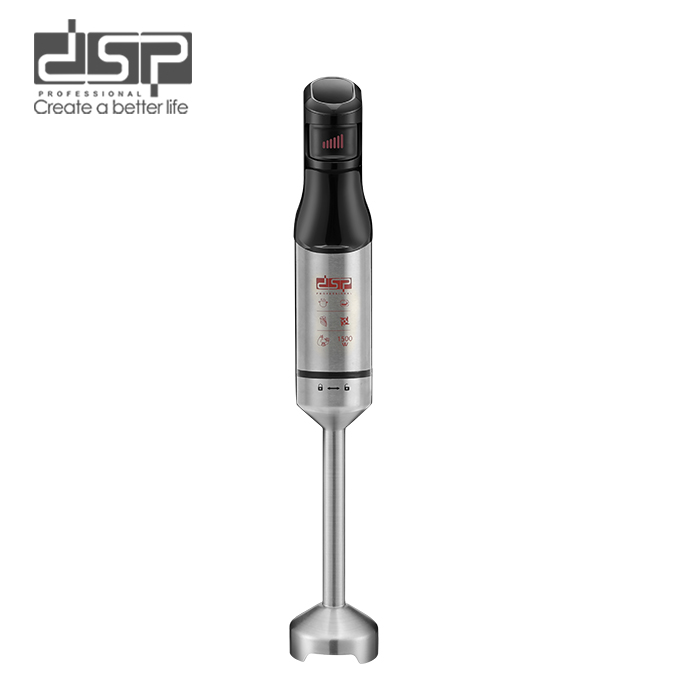
- Medium to high resistance, frequent use: 1000W to 1500W hand-held or immersion units. The KM1153 (1000W, 7912 pure copper motor, stainless steel body, supplied with SUS304 beaten egg net, SUS304 milk frothing bar, 500ml PC grinder cup and 600ml measuring cup), the KM1150 (1000W, 7812 all-copper motor, variable speed regulator), the KM1170 (1000W, DC 8112 pure copper motor, 6 speeds, digital display), the KM1197 (1500W, 15500 RPM) and the KM1194 (1500W, 15000RPM ±15%, 2 speeds with variable speed control, metal bearing).
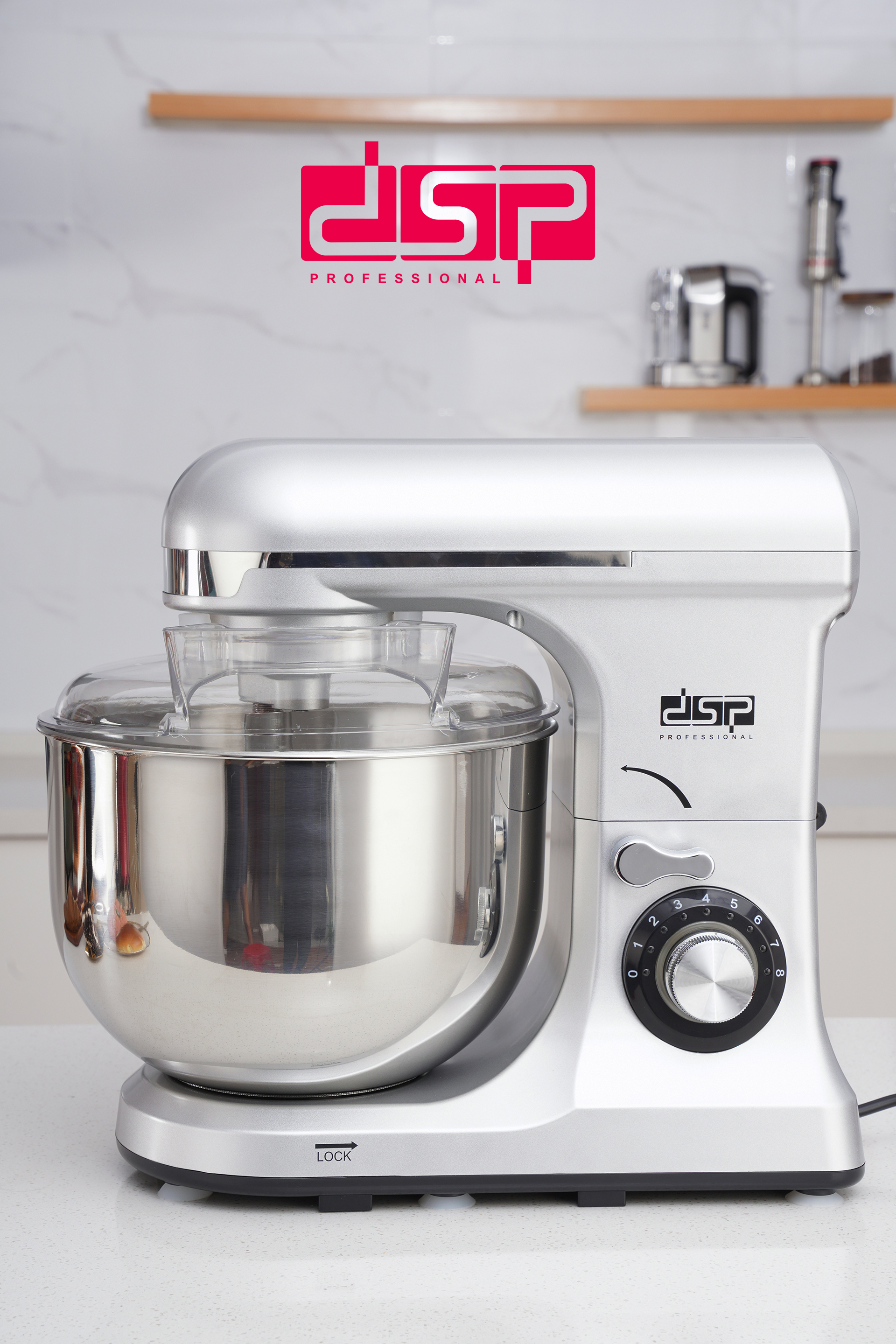
- Batch dough and stand work: 1200W to 1600W. The KM3043/KM3043A (1200W, 6 speed plus pulse, 5.5L SUS304 bowl with bowl cover, metal gear, stirs quickly in 2 to 3 minutes, lock pot, non-slip feet, blue LED lights around the speed controller), the KM1141 (1500W, 2 speeds with variable speed control, supplied with a 600ml grinder cup, a 600ml measuring cup, a whisk head, a whisk net, a milk frother bar and a base) and the KM3057 (1600W, rotary switch with 8 speeds, 7L stainless steel mixing bowl, planetary rotation design, lifting mechanism with safety switch, anti-slip feet).
Step 3 — Check whether the speed system matches the task rhythm. For emulsions and cream, look for variable speed control, a variable speed regulator or stepless speed change. For dough, look for fixed steps plus pulse, or a rotary switch with a wider position count.
Step 4 — Check the duty mode and the safety equipment. Several DSP hand mixers are specified for intermittent operation. The KM3043/KM3043A is specified for batch processing with a safety guard and bowl lock, and the KM3057 uses a lifting mechanism with a safety switch plus a steady structure designed to keep the unit stable during long-term work.
Step 5 — Check the food-contact materials. Stainless steel is the standard material for beaters, rods and blades across the range, with SUS304 and 304 stainless steel specified repeatedly. The KM1197 pairs a detachable 304 stainless steel stirring bar with 304 stainless steel two-leaf blades. The KM1194 pairs a SUS304 stirring rod with 304 stainless steel two-leaf blades and a 430 stainless steel panel. The KM1170 and KM1153 both specify detachable stainless steel stirring rods. The KM1142 specifies a detachable stainless steel 304 stir bar.
Use Cases: Choosing Specs by Kitchen Scenario
Home baking. The 200W to 300W band covers eggs, cream and light batters. The KM2135 and KM2091 both offer 5 adjustable speeds and both ship with dough hooks, so small batches of cookie dough are within scope. The KM2064 adds a turbo function at 300W. All of these are specified for intermittent operation, which matches occasional home use.
Everyday family cooking and purees. The KM1091 and KM1117 at 700W pair a detachable stainless steel rod with an ergonomic handle design intended for comfortable and stable operation — useful when blending directly in a pot. The KM1152 adds 800W plus a turbo function, a 600ml cup, an egg whisk and a 500ml plastic chopper, covering both blending and light chopping.
Frequent household or light food-service use. The KM1153, KM1150 and KM1170 all sit at 1000W. The KM1170 adds a digital display and 6 adjustable speeds, which supports repeatable settings across shifts. The KM1153 specifies a stainless steel body and a variable speed control, which suits a benchtop that gets used several times a day.
Heavy hand-held or immersion work. The KM1197 and KM1194 both run at 1500W, rated 15500 RPM and 15000RPM ±15% respectively. Both use 304 stainless steel blades and detachable stainless steel rods. The KM1194 adds an LED indicator light and a metal bearing. These are the units to consider when a 500W immersion blender is being pushed beyond its intended load.
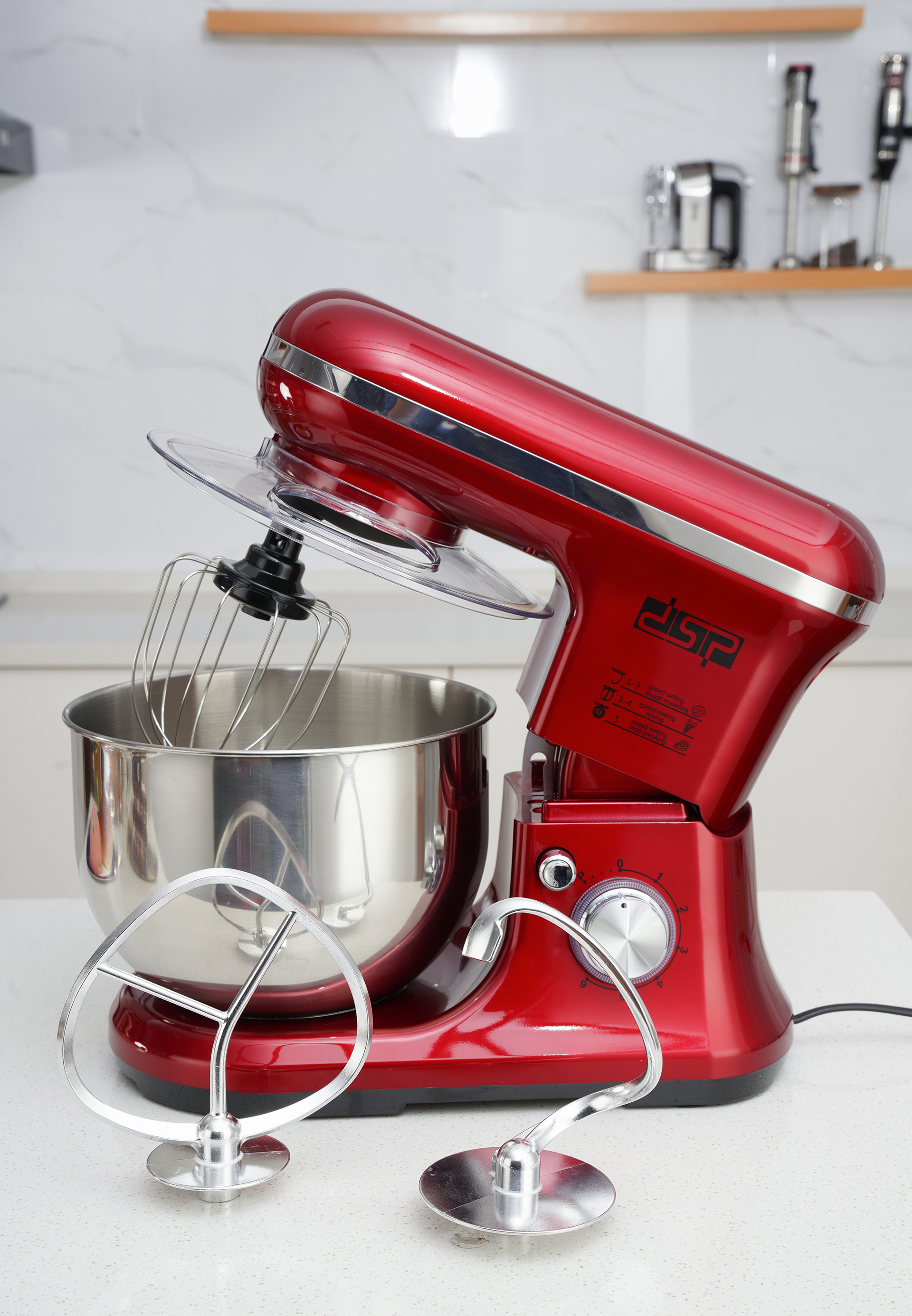
Small-scale commercial baking and dough preparation. The KM3043/KM3043A and KM3057 are the dough-capable machines. The KM3043/KM3043A is a planetary mixer with a 5.5L SUS304 bowl, 6 speed plus pulse, a metal gear, a lock pot and a lifting design, and is specified to stir quickly in 2 to 3 minutes. The KM3057 is a planetary mixer with a 7L stainless steel bowl, 8 speeds, a transparent bowl cover with an easy fill-in window, a lifting mechanism with a safety switch and anti-slip feet, specified for stable work over long-term operation.
Comparison Table: DSP Mixer Motor Specifications Side by Side
| Model | Type | Rated Power | Motor | Speed Control | Specified Features |
|---|---|---|---|---|---|
| KM2135 | Hand mixer | 200W | 4515 | 5 speeds adjustable | Turbo function, one-click acceleration, eject button, two 170mm chrome-plated egg beaters, two 170mm chrome-plated dough hooks, stainless steel decoration + ABS body |
| KM2091 | Hand mixer | 200W | 5525 full copper | 5 speeds | ABS body, 180mm egg beaters, 180mm dough mixer, intermittent operation |
| KM2064 | Hand mixer | 300W | 4530 full copper | 5 speeds with turbo | One pair of egg beaters, one pair of dough mixers, intermittent duty cycle |
| KM1142 | Hand blender / immersion blender | 500W | 7712 DC full copper | Variable speed regulator | Detachable stainless steel 304 stir bar, stainless steel four-leaf shaped blades |
| KM1091 | Hand blender / immersion blender | 700W | 5712 full copper DC | 2 touch speeds switch | 700ml cup, S/S whisk, 500ml plastic chopper, S/S rod, easy to detach for cleaning |
| KM1152 | Food mixer / hand blender | 800W | 7712 full copper | 1 speed control, turbo function, variable speed regulator | Detachable stainless steel stir bar, 600ml cup, egg whisk, 500ml plastic chopper |
| KM1153 | Hand mixer | 1000W | 7912 pure copper | 2 speeds, turbo function, variable speed control | Stainless steel body, removable stainless steel stirring bar, SUS304 beaten egg net, SUS304 milk frothing bar, 500ml PC grinder cup, 600ml measuring cup |
| KM1170 | Hand mixer / immersion blender | 1000W | DC 8112 pure copper | 6 speeds adjustable | Digital display, detachable stainless steel stirring rod, 304 stainless steel two-leaf blades |
| KM1194 | Hand mixer / immersion blender | 1500W | DC7912 pure copper | 2 speeds with variable speed control | 15000RPM ±15%, 430 stainless steel panel, SUS304 stirring rod, 304 stainless steel two-leaf blades, LED indicator light, metal bearing |
| KM1141 | Stand mixer / food blender | 1500W | 9812 full copper DC | 2 speeds with variable speed control | Stainless steel decorative ring and panel, removable stainless steel stirring bar, stainless steel four-leaf shaped blades, 600ml grinder cup, 600ml measuring cup, whisk head, whisk net, milk frother bar, base |
| KM3043 / KM3043A | Stand dough mixer (planetary) | 1200W | AC8825 copper clad aluminum | 6 speed + pulse | 5.5L SUS304 bowl with bowl cover, metal gear, lifting design, lock pot, blue LED lights around the speed controller, stirs quickly in 2 to 3 minutes, safety guard and bowl lock, batch processing |
| KM3057 | Stand dough mixer (planetary) | 1600W | 8840AC copper clad aluminum | Rotary switch 8 speeds | 7L stainless steel mixing bowl, transparent bowl cover with easy fill-in window, lifting mechanism with safety switch, planetary rotation design, anti-slip feet, intermittent duty cycle |
Frequently Asked Questions
What does the wattage rating on a mixer actually tell you?
Rated power describes electrical input rather than mechanical output, so it should be read alongside motor type and speed control. In the DSP range, the 200W to 1600W span covers hand mixers, immersion blenders and stand mixers. Two hand-held units at 1500W — the KM1197 with an 8112 pure copper motor at 15500 RPM and the KM1194 with a DC7912 pure copper motor at 15000RPM ±15% — show that wattage alone does not describe the mechanism.
Can a hand mixer handle dough, or is a stand mixer required?
Hand mixers can take dough hooks, but the data separates the two classes by duty mode. The KM2135 ships with two 170mm chrome-plated dough hooks and the KM2091 ships with an 180mm dough mixer, and both are specified for intermittent operation. For batch dough work, the stand dough mixers are the specified route: the KM3043/KM3043A provides a 5.5L SUS304 bowl, 6 speed plus pulse, a metal gear and a lock pot, and stirs quickly in 2 to 3 minutes, while the KM3057 provides a 7L stainless steel bowl, 8 speeds, a planetary rotation design and a lifting mechanism with a safety switch.
Which mixer specifications drive manufacturing cost the most?
The published specifications point to four cost-driving areas: winding material, where hand-held models use full copper or pure copper motors and the two stand dough mixers use copper clad aluminum motors; the speed control system, which ranges from a simple 2-speed switch up to a rotary switch with 8 speed positions or a digital display with 6 adjustable speeds; the transmission and bearing specification, such as the metal gear on the KM3043/KM3043A and the metal bearing on the KM1194; and the grade of stainless steel used for food-contact parts, which is specified as SUS304 or 304 stainless steel across several models.
How should a buyer verify motor specifications before a bulk order?
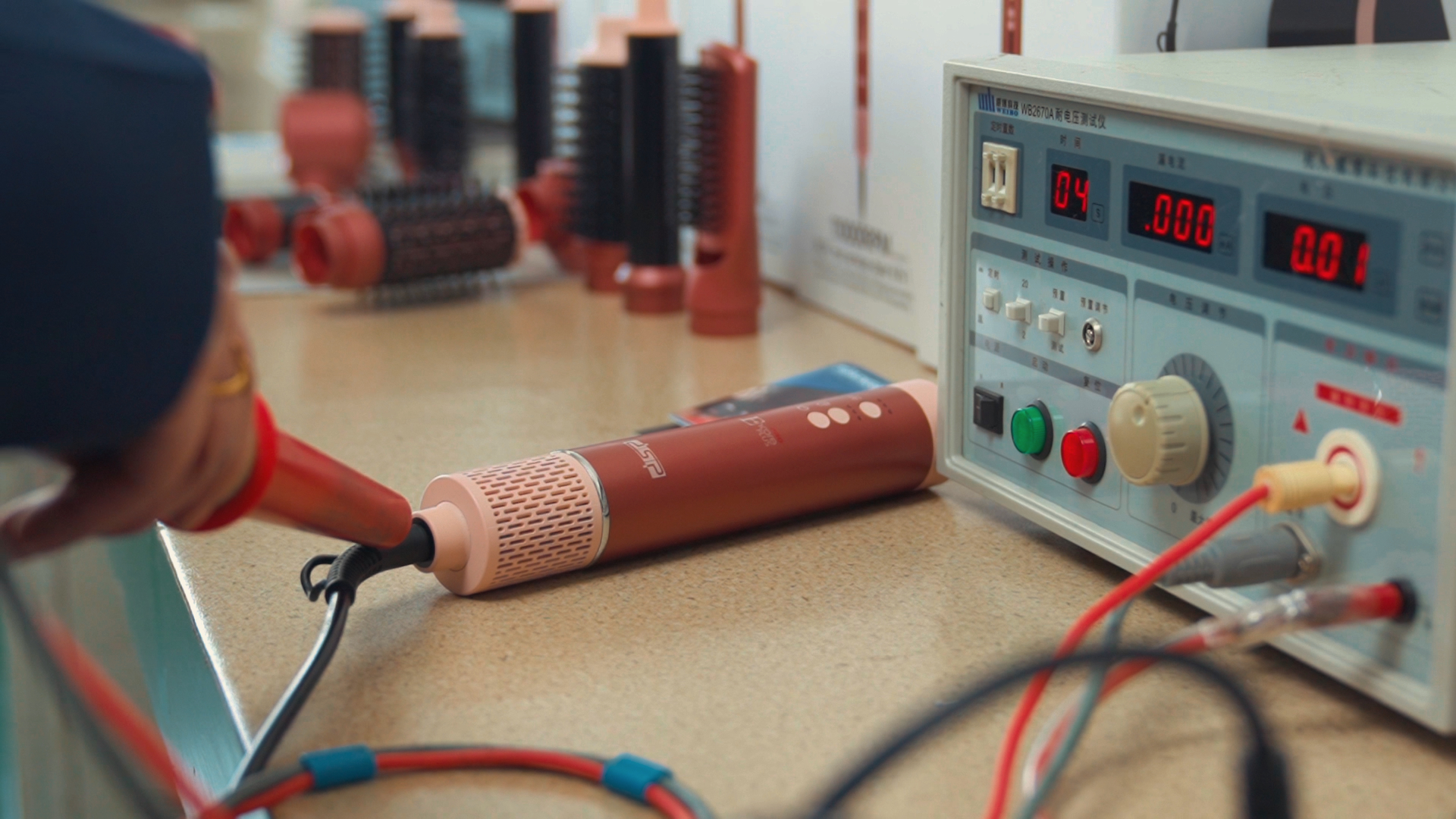
Sample first, then verify each line of the specification against the physical unit: the rated power, the number of speed positions or the range of the variable speed control, the motor code, and the material of the beaters, rods and blades. DSP supports OEM/ODM with customization across design, size, logo and material, applies 100% testing as its quality control standard, and provides a one-year after-sales period.
Do motor specifications affect lead time or minimum order quantity?
DSP lists a minimum order quantity of 500~1000 pieces and a lead time of 30–40 days, with a monthly capacity of 50000~100000 pieces. Because the motor, speed control system and food-contact materials are the specifications most likely to be reconfigured, locking them at the sampling stage avoids a specification change later that would require re-scheduling production. To review the full mixer range and matching specifications, you can download the DSP home appliances brochure or contact the team directly.
Conclusion
Reading mixer motor specifications comes down to three steps in a fixed order. Read the motor construction and code first, because that determines the class of machine you are looking at. Read rated power second, and treat it as an input rating rather than a performance guarantee. Read the speed control system third, and ask whether it is built for progressive adjustment or for sustained load.
Only after those three specifications are understood does the matching step make sense. Light batters and cream sit in the 200W to 300W hand mixer band. In-pot blending and purees sit between 500W and 800W. Frequent daily use and thicker mixtures sit around 1000W. Heavy hand-held work sits at 1500W. Batch dough moves to the 1200W to 1600W stand mixers, where bowl locks, metal gears and planetary rotation take over from raw wattage as the deciding factors.
Next Step: Match a Motor Specification to Your Project
DSP home appliances manufactures vacuum, oven, microwave, coffee machine, toaster, blender, mixer, air fryer, food processor, cooker, washing machine, cleaner, pan and personal care appliances, exports 100% of production, and serves markets across North America, South America, Europe, Asia, Africa, Oceania and the Middle East. If you are specifying mixers for a kitchen project, a retail range or a private-label program, the fastest way forward is a sample against your own dough and batter tests.
Have Questions or Need More Details?
Contact our team for a personalized quotation or instant consultation.
Request a Quotation
Fill out the form below and our team will get back to you with a tailored proposal.
WhatsApp Direct Chat
Prefer to chat in real-time? Message us on WhatsApp for instant assistance & quick answers.
- Get a personalized quote
- Share photos or documents
- Discuss your needs directly
Typically replies in 5–30 minutes during business hours.