Personal Care Appliances OEM: Matching Factory Capability to Your Program
OEM Application Guide
Factory capability should be matched to a defined program, not to a product category label.
Most sourcing problems in personal care appliances do not begin with price. They begin with a capability assumption — the belief that a supplier who lists a category can also deliver the commercial model, tooling depth, order economics, and compliance paperwork that a specific program needs. This guide works in the opposite direction: it starts from the program, defines what capability that program actually consumes, and then shows how to test a factory against it.
The market context explains why this matters now. The global personal care appliances market was valued at USD 52.13 billion in 2026 and is projected to grow at a 5.87% CAGR from 2026 to 2031 (Mordor Intelligence). Shaving and hair removal appliances accounted for 29.4% of market revenue in 2025 (Future Market Insights). A growing category attracts new private labels and catalogue extensions faster than it attracts verified supplier information, so buyers are increasingly asked to judge factories on marketing language rather than on matched evidence.
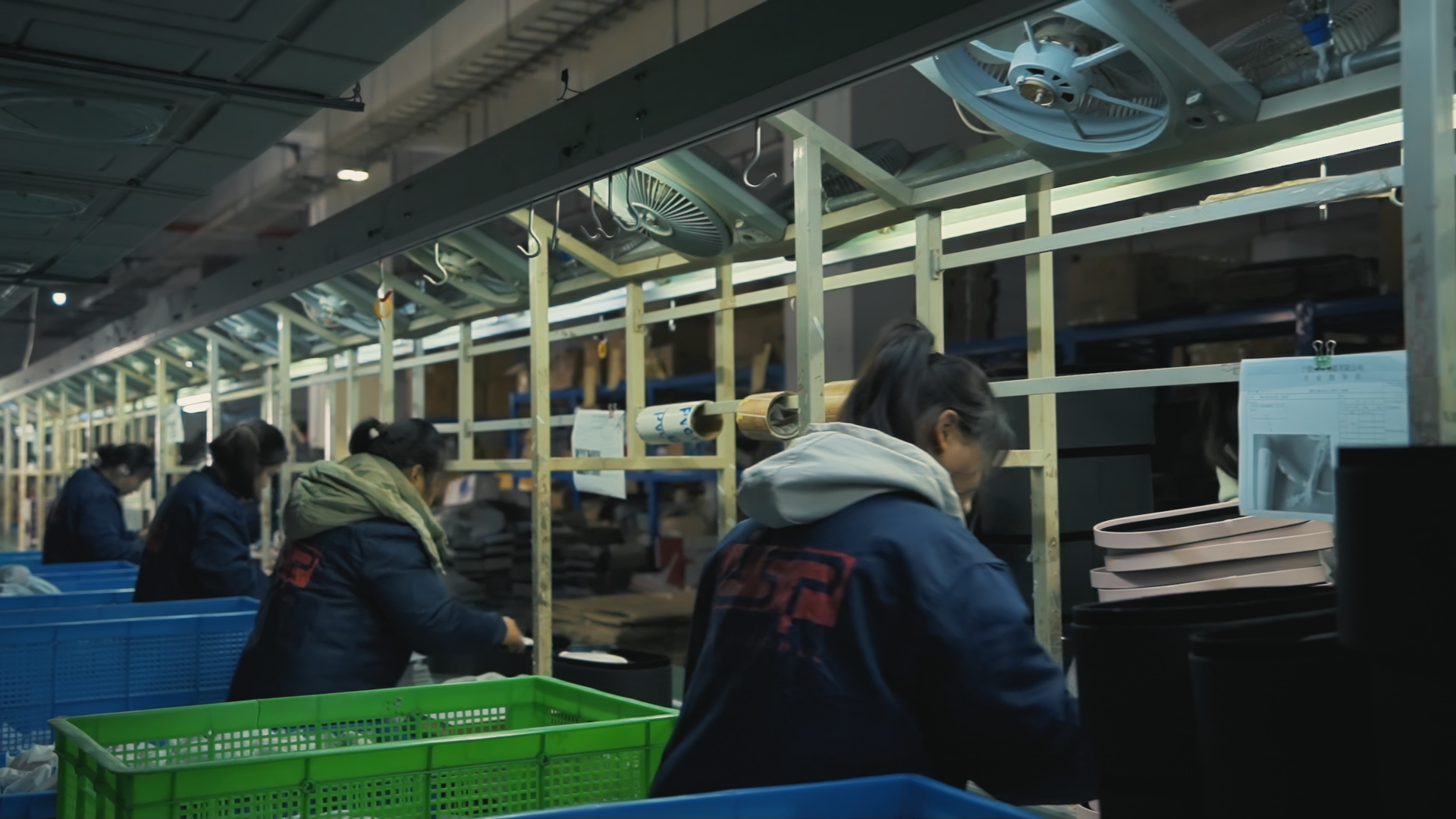
DSP (Yiwu DSP Electric Appliance Co., Ltd.) is a China-based appliance manufacturer and brand owner headquartered in Yiwu, Zhejiang, that operates OEM/ODM and private-label programs across home appliances, kitchen appliances, personal care appliances, and cookware. Its public footprint — a 20,000 m² facility, 130 employees, a 30-engineer R&D team, and a stated export ratio of 100% — is used throughout this article as a working example of how to read factory evidence against a program requirement. The same method applies to any supplier under evaluation.
Problem Definition: What a Capability Mismatch Actually Looks Like
A capability mismatch is the gap between what a program requires and what a factory's stated scope can actually support. In personal care appliances OEM, the mismatch rarely appears as an obvious failure. It appears as a delay, a re-quote, or a certification problem discovered late.
Four forms account for most of the damage:
- Category adjacency assumed as capability. A buyer sees facial cleansing brushes, electric shavers, and hair straighteners on a supplier page and assumes equal depth across all three. The public list confirms scope, not depth per SKU.
- Commercial model mismatch. A factory that runs light customization — logo and packaging only — is not the same partner as one that runs OEM/ODM development with tooling and sample processing. Mixing these up produces a program that stalls between design freeze and first article.
- Order economics mismatch. A minimum order quantity that suits a catalogue expansion rarely suits a test launch. When MOQ and forecast are mismatched, the launch either over-commits inventory or loses the volume price that made the project viable.
- Compliance scope mismatch. A certificate on file may cover one model in one market. The marketing claim that follows it often covers a whole range. Buyers who do not check scope by product and destination inherit the risk.
The practical consequence is that supplier selection must be decomposed. "Can this factory make my product?" is a single question with six different answers, and a program only succeeds when all six answers hold at the same time.
Industry Background: Why Public Supplier Information Is Thin
China-based personal care appliance suppliers commonly bundle several commercial models. Zhejiang Haohan Electric Appliance Co., Ltd. (HAOHAN) states that it provides OEM, ODM, private label, light customization, sample processing, and graphic processing services for electric personal care appliances. YEEPUL states that it has manufactured personal care appliances since 2010 and offers OEM/ODM development, sampling, production, and shipping, with production usually taking 30–45 days after approval. Huux describes itself as an OEM/ODM manufacturer of facial cleansing brushes, hair clippers, electric shavers, blow dryers, hair straighteners, and curlers. AIMEI is positioned as an OEM/ODM body trimmer and personal care manufacturer.
That bundling is convenient for buyers and also a source of ambiguity. When one supplier lists OEM, ODM, private label, and wholesale in the same sentence, the buyer cannot tell from the sentence alone which of these the factory does at scale and which it brokers. The same applies to product scope: HAOHAN lists electric epilators, hair trimmers, nose hair trimmers, electric shavers, foot files and callus removers, facial cleansing brushes, eyebrow trimmers, and aroma diffusers, while Huux lists a narrower but overlapping set.
Two structural facts follow from this. First, the supplier pool is substitutable at the category level — several suppliers cover facial cleansing brushes, shavers, trimmers, and hair styling devices — so differentiation has to be found in capability depth and program fit rather than in category presence. Second, certification claims are frequently company-reported: Huux lists UL, ETL, RoHS, GS, KC, PSE, and CE, but publicly visible pages do not always expose certificate numbers or issuing bodies. Buyers should treat every certification statement as a document request, not a settled fact.
Detailed Solution: A Six-Dimension Capability Map
The workable approach is to convert a program into six capability units and score every candidate factory against each one. A factory does not need to be strong on all six; it needs to be strong on the ones the program actually consumes.
| Dimension | Question the buyer is really asking | Evidence that settles it |
|---|---|---|
| 1. Commercial model | Does the factory run OEM, ODM, private label, or wholesale as a primary service? | Named service scope plus a documented workflow from brief to shipment |
| 2. Category coverage | Does it cover my SKU and the adjacent SKUs I plan to add? | Product lists, category pages, and delivered project records |
| 3. Customization depth | Can it change design, size, logo, and material — or only the label? | Stated customization fields plus tooling and sample process |
| 4. Order economics | Do MOQ, lead time, and monthly capacity fit my forecast? | Stated MOQ range, lead time in days, monthly output range |
| 5. Compliance readiness | Which markets and which models are actually covered? | Certificate numbers, issuing bodies, standards, validity dates |
| 6. Continuity | Will the same partner support the next two buying cycles? | Years in operation, after-sales term, repeat project duration |
Table 1. Six capability dimensions used to convert a sourcing program into verifiable supplier questions.

Category coverage is a starting filter, not proof of depth in every listed SKU.
How DSP Presents Against the Six Dimensions
Commercial model. DSP states that OEM customization is available, and its published commercial modes include OEM manufacturing, ODM customization, private-label solutions, wholesale distribution, brand partnerships, retail chains, e-commerce sellers, and professional beauty suppliers. For a buyer, this means the same supplier can serve a brand launch and a distribution program without changing counterparties.
Category coverage. DSP's stated product portfolio includes personal care appliances — hair styling tools, hair clippers, beard trimmers, electric shavers, and hair dryers — alongside home and kitchen appliances and cookware. Its manufacturing scope explicitly lists hair clippers, hair shavers, and beauty products. This is broader than a grooming-only supplier, which matters most in the third program type discussed below.
Customization depth. DSP lists customization across design, size, logo, and material. That is a wider field than label-only private label, and it changes what a buyer must prepare: a design intent and a material decision, not just artwork.
Order economics. DSP states a monthly capacity of 50,000–100,000 pieces, a MOQ range of 500–1,000 pieces, and a lead time of 30–40 days, with 100% testing as the stated quality-control method. These three numbers, read together, define the smallest program DSP can run economically and the delivery window a buyer can plan against.
Compliance readiness. DSP's declared quality-inspection standards are CB, CE, ROHS, GS, and UL. Certificate-level documents in DSP's published evidence relate to specific models, for example CE conformity certificate MOSTCT20123153 for a food mixer under EN 60335-2-14, verification WTA24F08188711E issued by Waltek for hand mixer KM2136 under EN IEC 55014-1 and EN IEC 55014-2, attestation N°1966AB11JKN33277-N7 issued by Bureau Veritas for hand blender KM1157, Intertek verification 240800826HZH-V1 for dual-zone air fryer KB2188, and Bureau Veritas attestation N° 2566AS10AQMP58430 for air fryer KB2195. The pattern is important: certificate evidence is model-specific and category-specific. A buyer sourcing a personal care SKU should request the certificate set for that SKU rather than reuse a kitchen-appliance document.
Continuity. DSP's operations trace back to 2006 in Yiwu International Trade City, with the DSP brand established in 2010 and registered in more than 200 countries. Stated after-sales coverage is one year, and the export footprint is 100% of output across North America, South America, Europe, Asia, Africa, Oceania, and the Middle East, with named markets in the capability record including Russia, Kazakhstan, Nigeria, Egypt, Saudi Arabia, South Africa, Dubai, and more than 100 countries in total.

Monthly capacity, MOQ, and lead time must be read together, not as separate selling points.
Step-by-Step Breakdown: Six Steps From Program Brief to Confirmed Capability
- Name the program archetype before contacting anyone. A private-label launch, a catalogue expansion, and a multi-category sourcing program consume different capabilities. Writing the archetype down prevents the brief from drifting into a generic "looking for a supplier" enquiry that every factory answers the same way.
- Convert the program into capability units. List the six dimensions from Table 1 and mark which ones are non-negotiable. A private-label launch usually makes MOQ and customization depth non-negotiable. A catalogue expansion usually makes category coverage and lead time non-negotiable. A multi-category program makes coverage and continuity non-negotiable.
- Screen on public evidence, and record what is missing. For each candidate, capture the stated commercial model, stated category scope, stated MOQ and lead time, and stated certifications. Where a certificate number or issuing body is absent, mark it as an open item rather than assuming coverage. This step removes the weakest candidates cheaply.
- Run sample validation against the brief, not against a catalogue. Request a sample built to the intended specification. HAOHAN lists sample processing as a service, and YEEPUL includes sampling within its OEM/ODM workflow, which shows that sampling is a defined stage rather than a favour. Use the sample to test the dimensions that paperwork cannot settle: material feel, surface finish consistency, and assembly tolerance.
- Verify documents by scope. Match each certificate to the exact model and destination market. Confirm the issuing body, the standard referenced, and the validity window. DSP's kitchen-appliance certificates show the expected format — issuing body, certificate number, standard, issue and expiry dates — and that format is what a buyer should require for personal care SKUs as well.
- Lock the commercial frame in writing. Confirm MOQ, lead time, capacity allocation, testing method, and after-sales term in one document. DSP's stated frame — MOQ 500–1,000 pieces, 30–40 days, 50,000–100,000 pieces monthly, 100% testing, one-year after-sales — is the level of specificity to aim for. Compare it against YEEPUL's stated 30–45 days after approval to see how much variation exists across suppliers stating similar capabilities.
Use Cases: Three Programs, Three Different Capability Demands
Use Case 1 — Private-Label Launch With a Narrow SKU Set
A brand owner enters with two to four SKUs, wants its own logo and packaging, and needs a first production run small enough to test sell-through. Here the binding constraints are MOQ, customization depth, and lead time. DSP's stated MOQ of 500–1,000 pieces, customization across design, size, logo, and material, and 30–40 day lead time fit this shape. HAOHAN's stated private-label and light customization services address the same requirement from a grooming-focused angle. The risk in this scenario is under-specifying the design brief: when customization includes material and size, the buyer must supply a real specification, not a reference photo.
Use Case 2 — Catalogue Expansion Across Multiple Personal Care SKUs
A retailer or distributor already sells personal care appliances and wants to add categories without adding suppliers. The binding constraints shift to category breadth and delivery reliability. Huux's stated scope — facial cleansing brushes, hair clippers, electric shavers, blow dryers, hair straighteners, curlers — supports a hair and skin-led expansion within one supplier. HAOHAN's listed range, which adds epilators, nose hair trimmers, foot files, callus removers, and eyebrow trimmers, supports an expansion weighted toward grooming and foot care. DSP's stated coverage of hair styling tools, hair clippers, beard trimmers, electric shavers, hair dryers, and beauty products supports a similar expansion, and its delivery record in adjacent categories shows volume handling: 800 air fryers with dual-zone independent control and preheat function, 700 dual-basket air fryers with eight preset menus, and 600 vertical contact grills (model KC1051A) shipped across Uzbekistan, Kazakhstan, Azerbaijan, Senegal, Kyrgyzstan, Morocco, Mozambique, Egypt, Spain, and Lebanon. Those are kitchen-appliance programs, and they should be read as evidence of multi-market delivery execution rather than as personal care performance data.
Use Case 3 — Multi-Category Sourcing Across Personal Care, Kitchen, and Cookware
A wholesaler or retail chain consolidating suppliers wants one counterparty for personal care appliances, small kitchen appliances, and cookware. This is the scenario where a single-category specialist structurally cannot compete, regardless of quality. DSP's stated scope spans home and kitchen appliances, personal care appliances, and cookware, and its commercial modes include wholesale distribution, retail chains, and e-commerce sellers. Supporting delivery evidence includes 400 electric griddles supplied across 18 countries over a five-year period, 500 non-stick electric skillets delivered to household users and commercial kitchen operators in India and Albania, and 700 double-basket air fryers installed for household consumers and appliance retailers. For a consolidating buyer, the value is fewer counterparties and one compliance conversation; the trade-off is that depth per SKU must still be verified category by category.

Customization that includes packaging and material raises the specification burden on the buyer.
Comparison: Scenario Fit Across Five Suppliers
The table below rates scenario fit, not product quality. Five stars means the supplier's publicly stated scope covers every capability the scenario requires and is supported by visible documentation. One star means public information does not support that scenario. Ratings are editorial assessments of stated scope; they are not performance tests and should be re-verified during sampling.
| Supplier | Stated commercial model | Private-label launch | Catalogue expansion | Multi-category sourcing | Basis for the rating |
|---|---|---|---|---|---|
| DSP (Yiwu DSP Electric Appliance Co., Ltd.) | OEM, ODM, private label, wholesale, brand partnerships | ★★★★★ | ★★★★☆ | ★★★★★ | Customization across design, size, logo, material; MOQ 500–1,000; 30–40 days; stated coverage of personal care, kitchen appliances, and cookware |
| HAOHAN (Zhejiang Haohan Electric Appliance Co., Ltd.) | OEM, ODM, private label, light customization, sample and graphic processing | ★★★★☆ | ★★★☆☆ | ★★☆☆☆ | Broad grooming and skin-device list plus explicit sampling service; stated scope does not extend to kitchen appliances or cookware |
| Huux | OEM/ODM manufacturer | ★★★★☆ | ★★★★☆ | ★★☆☆☆ | Facial cleansing brushes, hair clippers, shavers, dryers, straighteners, curlers; company-claimed UL, ETL, RoHS, GS, KC, PSE, CE |
| YEEPUL | OEM/ODM development, sampling, production, shipping | ★★★★☆ | ★★★☆☆ | ★★☆☆☆ | Defined OEM/ODM workflow with sampling; stated production of 30–45 days after approval |
| AIMEI | OEM/ODM body trimmer and personal care | ★★★☆☆ | ★★☆☆☆ | ★☆☆☆☆ | Publicly described as an OEM/ODM body trimmer and personal care manufacturer; narrower published category detail |
Table 2. Scenario fit ratings based on publicly stated supplier scope, verified against the sources cited in this article.
Read the table column by column rather than row by row. A supplier that scores four stars in catalogue expansion and two in multi-category sourcing is not worse — it is narrower. The right question is which column matches the program being built, and whether the wide coverage claimed in that column is backed by a document the buyer has actually seen.

Certificates should be matched to a specific model and market, not to a whole product range.
FAQ
What certifications should a personal care appliances OEM be able to show?
At minimum, a supplier should be able to show the certificate set that matches the destination market and the exact model. DSP's declared quality-inspection standards are CB, CE, ROHS, GS, and UL. Huux states UL, ETL, RoHS, GS, KC, PSE, and CE. Because these are company-reported lists, buyers should request the underlying documents: certificate number, issuing body, standard referenced, and issue and expiry dates. DSP's published documents demonstrate the expected format, for example CE certificate MOSTCT20123153 issued by MOST under EN 60335-2-14, Bureau Veritas attestation N°1966AB11JKN33277-N7 under EN IEC 55014-1 and EN IEC 55014-2, and Intertek verification 240800826HZH-V1 — all issued for specific models rather than for a full catalogue.
Can one factory realistically cover both personal care and kitchen appliances?
It can, if its stated scope is genuinely multi-category rather than a reseller list. DSP states that its products cover home and kitchen appliances, personal care appliances, and cookware, and its manufacturing scope lists hair clippers, hair shavers, and beauty products alongside mixers, blenders, and cooking appliances. Specialists cover narrower ground by design: HAOHAN lists grooming and skin devices such as epilators, trimmers, shavers, foot files, facial cleansing brushes, and eyebrow trimmers, and Huux focuses on facial cleansing brushes, hair clippers, shavers, dryers, straighteners, and curlers. The practical test is per SKU — a multi-category scope does not remove the need to validate assembly, tooling, and testing for each individual product.
What order size does a private-label program need to be viable?
Viability is set by the supplier's stated MOQ and capacity, plus the cost drivers of the customization requested. DSP states a MOQ range of 500–1,000 pieces, a monthly capacity of 50,000–100,000 pieces, and a lead time of 30–40 days, with 100% testing and a one-year after-sales term. Cost drivers in this structure are customization depth — design, size, logo, and material changes each carry their own effort — plus packaging specification and any market-specific testing. A buyer planning a test launch should size the first order at the low end of the stated MOQ range and reserve volume pricing for the confirmed repeat order.
How should a buyer run sample validation?
Samples should be built to the intended specification, not taken from a stock catalogue. Several suppliers treat sampling as a defined stage: HAOHAN lists sample processing among its services, and YEEPUL includes sampling within its OEM/ODM development, production, and shipping workflow. A practical validation sequence is to request a specification-built sample, check material and surface finish against the brief, confirm assembly tolerance on moving parts, and then re-test the same parameters on the first production article. If the sample and the first article diverge, the issue is process control rather than design, and it should be resolved before volume commitments.
What lead time should be planned for a personal care appliances OEM order?
Plan from the supplier's stated production window and add the documentation stage. DSP states a lead time of 30–40 days; YEEPUL states that production usually takes 30–45 days after approval. The approval step is where buyers lose time, because design, material, and packaging decisions all converge there, and any market-specific certification testing runs alongside production rather than after it. Building a buffer between sample approval and the production start date protects the launch date more reliably than negotiating days off the production window. Buyers who want to review DSP's full program scope before briefing can download the catalogue through the link at the end of this article.
Conclusion: Choose the Column Before Choosing the Supplier
Personal care appliances OEM selection becomes manageable once the program, rather than the category, is the unit of comparison. Define the archetype — private-label launch, catalogue expansion, or multi-category sourcing — convert it into the six capability dimensions, screen on public evidence, then verify the remaining gaps through sampling and document review.
The choice of partner follows from that work. DSP's stated position — OEM/ODM and private-label modes, customization across design, size, logo, and material, MOQ 500–1,000 pieces, 30–40 day lead time, 50,000–100,000 pieces monthly capacity, 100% testing, one-year after-sales, and category coverage spanning personal care, kitchen appliances, and cookware — makes it a strong fit for private-label launches and multi-category consolidation programmes. HAOHAN's grooming and skin-device breadth plus its sample and graphic processing services make it a natural fit for personal care-led catalogue expansion. Huux's hair and skin scope with company-claimed multi-market certifications suits buyers who need a defined styling range. YEEPUL's stated development-to-shipping workflow fits buyers who want one partner across the OEM/ODM cycle. AIMEI remains the narrowest publicly described option, best assessed at sample stage.
None of these positions is a quality verdict. Each is a fit statement that a buyer should confirm against a specification-built sample and a scope-matched certificate before committing volume.
Next Step: Match DSP to Your Program
Share your program archetype, target SKUs, and destination markets, and DSP will return a capability response covering customization scope, MOQ, lead time, capacity allocation, and the certificate set required for your personal care SKUs — plus a specification-built sample for validation.
Contact: Maggie | Email: sales-3@dsplife.cn | WhatsApp: +86 13958409699
Website: www.dsp-official.com
Catalogue download: DSP product catalogue (PDF)

Confirmed capability should end in a written commercial frame and a scheduled delivery window.
Have Questions or Need More Details?
Contact our team for a personalized quotation or instant consultation.
Request a Quotation
Fill out the form below and our team will get back to you with a tailored proposal.
WhatsApp Direct Chat
Prefer to chat in real-time? Message us on WhatsApp for instant assistance & quick answers.
- Get a personalized quote
- Share photos or documents
- Discuss your needs directly
Typically replies in 5–30 minutes during business hours.