
Mixer Types Explained for Home Appliance Buyers: Hand, Stand, Planetary, and Dough Mixers

Most home appliance catalogs use the word “mixer” for at least four different machines. A hand mixer and a stand mixer share a name and almost nothing else. A planetary mixer can be a countertop appliance or a bench machine in a bakery. A dough mixer may be a stand mixer fitted with a dough hook or a purpose-built kneading machine. For buyers at the decision stage, the practical task is not choosing a favorite mixer type but confirming that the supplier's category name, the machine's mechanism, and the end market's expectation all describe the same product. This explainer maps the four mixer families that appear in home appliance sourcing, shows where naming variation creates risk in catalog review and OEM/ODM briefs, and provides a normalization routine that can be applied before any price comparison begins.
The Problem: “Mixer” Names a Category, Not a Specification
In a sourcing price list, “mixer” is a heading, not a description. It does not state where the motor sits, how the mixing tool moves through the bowl, what output the machine is built for, or which tools are included. Two suppliers can list a “mixer” at a similar position in their catalogs while one is a handheld beater and the other is a countertop machine with a bowl, a dough hook and a set of optional attachments.
Four naming collisions cause most of the confusion in this category:
- Mechanism described as a product class. “Planetary” describes a tool path — the mixing tool turns on its own axis while also travelling around the axis of the bowl. It is not a size class, a price tier or a market segment.
- One machine, several names. Hand mixer, electric beater, handheld beater and egg beater frequently refer to the same product. Stand mixer, food mixer, table mixer, kitchen machine and food preparation machine are also used interchangeably across catalogs.
- Adjacent categories bleeding in. Blender, immersion blender, drink mixer, milk frother and food processor all sit near mixers in catalogs, and some of them share motors, housings or attachments with mixer platforms.
- Market-level expectations. A buyer in one market may read “mixer” as a stand mixer by default, while a buyer in another reads it as a handheld beater. The catalog entry does not change; the expectation does.
At the decision stage, those collisions have three practical consequences. A catalog review can approve the same machine twice under two names and create duplicate SKUs. An OEM/ODM brief can request a “food mixer” while the factory reads a stand mixer and the buyer means a multi-attachment platform. And a retail listing can be written in terminology that does not match how the end market describes the product, which weakens the page even when the machine itself is correct.
Where Mixers Sit in the Home Appliance Category
Mixers belong to the food preparation group of small kitchen appliances, alongside blenders, food processors, choppers and grinders. The wider category is large and still expanding. The global household appliances market was estimated at USD 461.69 billion in 2024, with major appliances accounting for an 89.55% revenue share, according to Grand View Research. Fortune Business Insights projects the global small domestic appliances market to reach USD 222.52 billion by 2026, growing at a CAGR of 4.92%. Within small kitchen appliances, Grand View Research valued the category at USD 39.6 billion in 2025.
For sourcing purposes, the more useful structure is functional rather than financial. A catalog built around function — whipping, mixing, kneading, blending, processing — handles naming variation better than a catalog built around product names, because function is what the end user actually buys. The four mixer families below are separated by function first and by name second, which is why the model holds up even when a supplier's price list uses different words for the same machine.
DSP home appliances (Yiwu DSP Electric Appliance Co., Ltd.) is a Yiwu-based manufacturer that meets this naming problem inside its own catalog. The company was established in 2006 in Yiwu, China, and the DSP brand was registered in over 200 countries. It expanded into kitchen appliances, kitchenware and cleaning appliances in 2016 and now operates a 20,000 m² factory with 130 employees, a 30-engineer R&D team and an annual output of 5,000,000 units, exporting 100% of production to North America, South America, Europe, Asia, Africa, Oceania and the Middle East. Its range covers mixer, blender, food processor, vacuum, oven, microwave, coffee machine, toaster, air fryer, cooker, washing machine, cleaner, pan and personal care appliances — so the mixer naming question is one the company handles in its own product documentation, not only one that buyers meet in a spreadsheet.
The Four Mixer Types: Design Differences, Applications and Naming Variants
Each of the four families below is defined by how it drives the tool and what load it is expected to handle. Naming variants are listed with each family so a buyer can match a supplier's wording to the correct type before opening a negotiation.
1. Hand Mixers and Electric Beaters
A hand mixer is a handheld motor housing with two detachable tools — beaters, whisks or dough hooks — mounted into the front of the unit. There is no bowl and no stand: the operator holds the machine and moves it through the mixture. Tool motion is single-axis rotation, and the mixing result depends partly on how the operator moves the unit.
Typical applications: whipping cream and egg whites, light cake and pancake batters, frosting and icing, mashing soft ingredients, and small-batch mixing where a countertop machine is unnecessary.
Naming variants seen in catalogs: hand mixer, electric beater, handheld mixer, hand-held beater, egg beater, mini mixer, whisk machine. Some suppliers list “electric beater” as a separate low-price line and “hand mixer” as the branded line, so the same platform can appear twice in a single catalog.
What to confirm: which tools are included (beaters, whisks, dough hooks), how the tools attach and eject, how speed is controlled, and the exact wording used on packaging and the nameplate. Limit to respect: a hand mixer is not a dough machine. It can carry light dough hooks, but heavy or stiff doughs belong to a dough-rated platform.
2. Stand Mixers and Food Mixers
A stand mixer places the motor in a fixed base or head and supports the bowl and tools on the machine itself. Tools include beaters, whisks and dough hooks, and some platforms accept a blender jug, mincer or food processor attachment. Design differences inside this family matter as much as differences between families: some models tilt the head to load the bowl, others lift the bowl to a fixed head; some rotate the tool only, others rotate the bowl and the tool together.
Typical applications: creaming butter and sugar, cake and muffin batters, medium dough volumes, whipping, and general mixing where the operator needs both hands free.
Naming variants: stand mixer, food mixer, table mixer, kitchen machine, food preparation machine, multi-function mixer. “Food mixer” is the most ambiguous term in the category. In some catalogs it means exactly the same machine as a stand mixer; in others it signals a multi-attachment platform whose price depends on which accessories are included.
What to confirm: which attachments are in the box and which are optional, tool-to-bowl clearance, bowl volume and material, and whether the head is fixed or tilting. Limit to respect: kneading performance is set by motor torque and gearbox rating, not by the number of tools supplied. A machine marketed as a food mixer is not automatically rated for continuous heavy dough.
3. Planetary Mixers
A planetary mixer drives the mixing tool in two simultaneous movements: the tool spins on its own axis while also travelling around the axis of the bowl. The tool path therefore covers the whole bowl rather than a fixed track, which is why the term appears on machines where even mixing matters.
The critical point for buyers is that “planetary” describes a motion, not a class of machine. The same word covers a compact countertop appliance and a bench or floor-standing machine built for continuous production. Two catalogs can both list a “planetary mixer” while describing machines in different performance bands.
Typical applications: batter, icing, fillings, toppings and dough when the drive and gearing are specified for that load.
Naming variants: planetary mixer, planetary dough mixer, planetary food mixer, bowl-revolving mixer, orbital mixer. What to confirm: which elements actually move (tool, bowl or both), tool-to-bowl clearance, duty rating, and whether the same external design is offered in home and light-commercial configurations. Limit to respect: the word “planetary” says nothing about load capacity. Confirm the intended output first, then compare price.
4. Dough Mixers
A dough mixer is specified around kneading. It may be a stand mixer fitted with a dough hook, a dedicated dough kneader, a spiral mixer, or a bread maker with a kneading program. The distinguishing feature is that the machine is designed around the heaviest load in the mixing category — stiff dough.
Naming variants: dough mixer, dough kneader, kneading machine, spiral mixer, bread dough mixer. Because “dough mixer” and “planetary mixer” overlap, buyers should treat the two terms as answers to different questions: planetary describes how the tool moves, dough describes what the machine is built to handle.
The load profile is the specification. Dough exposes weak points that light mixing never reaches: motor and gearbox heating, tool stress, and jamming when a batch is too stiff. DSP's documented risk-control measures for motor-driven food preparation appliances such as meat grinders and food processors show the pattern buyers should expect a dough-rated platform to carry. Those measures include built-in overheat protection that automatically cuts power when temperature rises abnormally, multi-speed regulation that prevents prolonged high-load running, automatic reversal to relieve the load when the tool jams, a defined cooling interval after extended continuous operation — the documented interval for that appliance group is a ten-minute cooling period after thirty minutes of continuous operation — fuses on the control board, sealed blades held in containers with push-button locking so the machine runs only when correctly assembled, and non-slip feet. On the material side, the same documentation specifies motors, gears, wires and thermostats selected for high-temperature resistance and wear resistance, plus 100% withstand voltage, grounding continuity, insulation and functional testing on the production line before shipment.
What to confirm: which of those protections the mixer platform carries, at what continuous running time the machine must rest, how the drive behaves under a stiff batch, and how the tool is secured so it cannot work loose under load.
Step-by-Step: Normalizing a Mixer Range Before Comparing Suppliers
The routine below can be applied to any mixer catalog, whether it contains four lines or forty, and it is designed to be completed before price comparison starts.
- Start from the output, not the name. Write down what the machine must produce: whipped cream, cake batter, bread dough, or continuous heavy kneading. Output eliminates categories faster than any other filter. Whipping and light batter point to hand mixers and light stand mixers; medium dough points to a dough-rated stand or planetary machine; continuous kneading points to a purpose-built dough mixer.
- Fill the five slots for every line. Motor position, tool motion, container or bowl, tool set, and intended output. A line described only as “mixer, 2 tools” cannot be compared with anything.
- Rewrite supplier names into your own canonical four terms. Keep the supplier's original name and your normalized name in the same column. This single step prevents most duplicate-SKU mistakes later in the process.
- Get the drive mechanism in writing. Ask which parts move — tool only, bowl only, or both — and whether the motion is single-axis or planetary. This is the question that separates the four families in practice.
- Match the protection package to the load. For light mixing, overheat protection and speed control are baseline. For dough, ask specifically about overheat cut-off, multi-speed regulation for high-load running, load relief or reversal during jamming, and the cooling interval required after continuous operation.
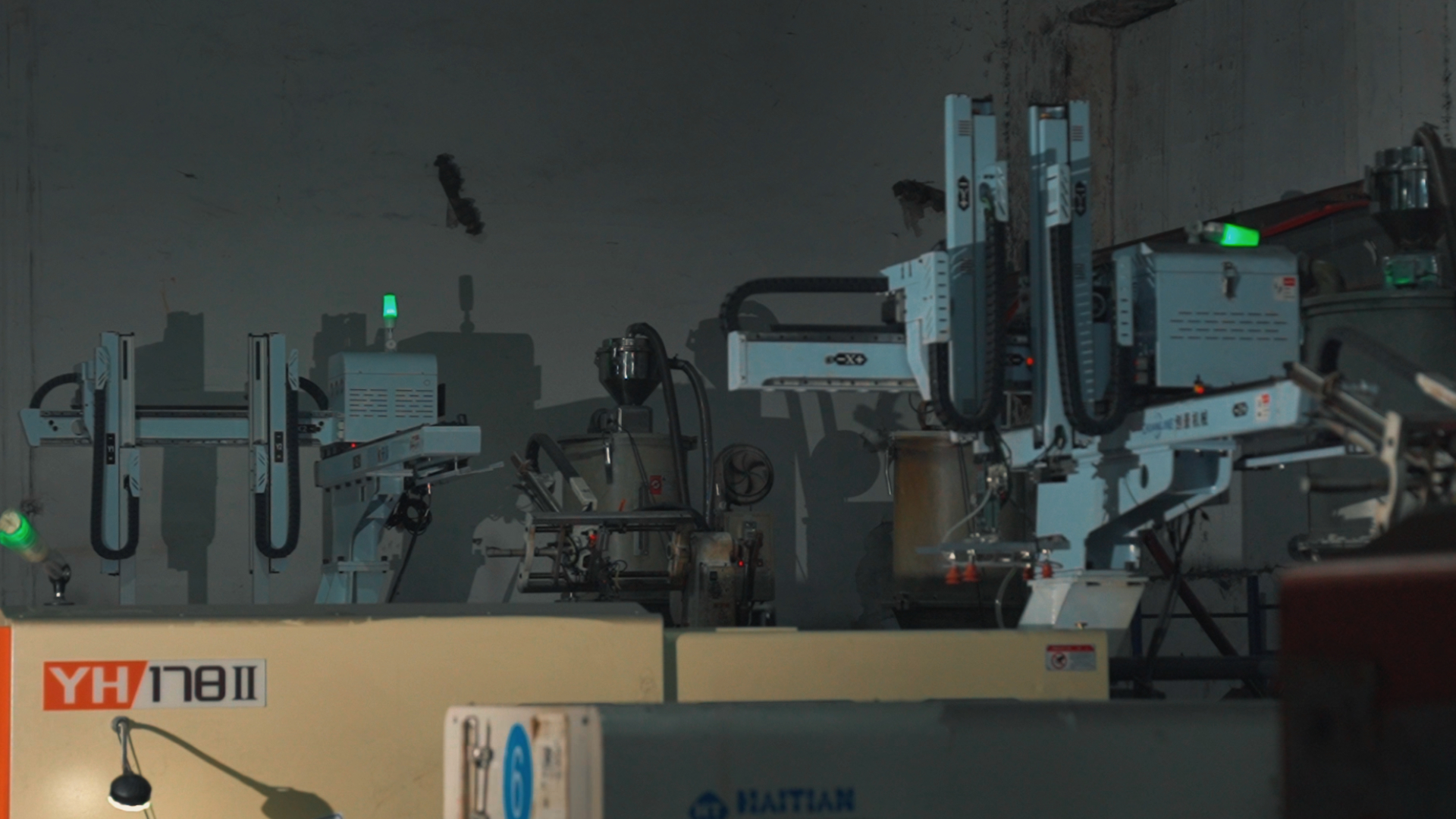
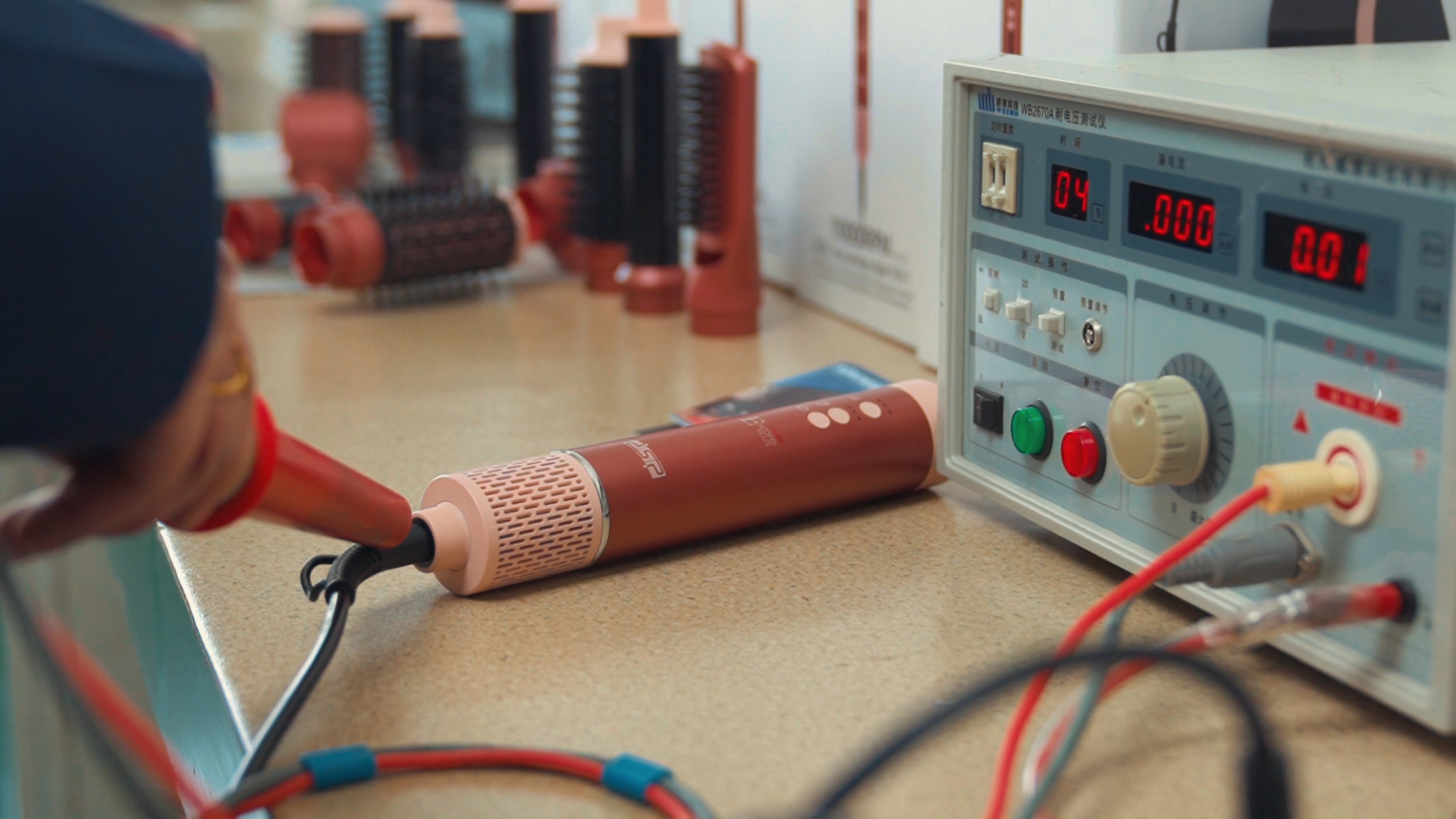
- Check factory evidence, not only the sample. DSP's documented food preparation practice is to run 100% withstand voltage, grounding continuity, insulation and functional tests on the production line, selecting certified components for motors, gears, wires, PCBs and thermostats. Ask any supplier to state which of these checks are performed on every unit rather than only on a sample batch.
- Lock the terminology inside the OEM/ODM brief. One canonical name, one configuration definition, the attachment list, and the exact wording to be used on packaging and the nameplate. Fix the destination market's rated voltage and plug type at this stage as well, because changing them later touches the motor, cord set and compliance scope.
- Decide how many SKUs the range actually needs. A functional ladder — hand mixer at the entry point, stand mixer in the middle, a dough-rated machine at the top — gives a buyer three reasons to trade up. Three names for one platform gives the buyer nothing and doubles catalog maintenance.
Use Cases: Matching Mixer Types to Buying Situations
Mass retail starter kitchens
Hand mixers and electric beaters suit promotional sets, houseware bundles and entry price points. They ship in compact packaging, share a simple motor platform, and are the easiest mixer type to list across markets because the form is universally understood. Naming discipline still matters: list the same product once, not once as a hand mixer and once as an electric beater.
Home baking and family kitchens
Stand mixers with planetary gearing sell on attachment set, bowl capacity and consistent results rather than on the word “mixer”. Buyers building this tier should specify which attachments are standard and which are optional, because the accessory list is what differentiates two otherwise similar listings.
Small bakeries, cafés and cloud kitchens
In light commercial use, duty cycle is the deciding factor. A dough-rated planetary or spiral machine with documented overheat protection, load relief and a defined cooling interval will outlast a home platform pushed into daily production. Specify kneading output and continuous running time before price.
Private-label mixer ranges
A brand owner building a mixer line should design the ladder around functions, not around synonyms: whip and light batter, mix and moderate dough, knead heavily. Each step justifies a price increase; each synonym only creates confusion in the catalog and in retail listings.
Distributor catalog consolidation
Distributors carrying several suppliers often find that two “different” mixer SKUs are the same machine under two names. Normalizing names exposes the overlap, after which negotiation can focus on genuine differences — tool quality, bowl construction, speed control, protection electronics and attachment count.
Comparison Table: The Four Mixer Types at a Glance
| Mixer type | How it works | Typical output | Common catalog names | Main buying risk |
|---|---|---|---|---|
| Hand mixer / electric beater | Handheld motor, two detachable tools, single-axis rotation, operator moves the unit | Whipped cream, egg whites, light batter, icing | Hand mixer, electric beater, egg beater, handheld beater | Being asked to knead heavy dough; a second name for the same platform doubling SKUs |
| Stand mixer / food mixer | Fixed base supports bowl and tools; head may tilt or bowl may lift; tool and/or bowl rotate | Cake batter, creamed butter and sugar, medium dough, whipping | Stand mixer, food mixer, table mixer, kitchen machine | “Food mixer” meaning different machines in two catalogs; attachments priced separately |
| Planetary mixer | Tool spins on its own axis while travelling around the bowl axis | Even batter, icing, fillings, dough when the drive is rated for it | Planetary mixer, planetary food mixer, bowl-revolving mixer | Assuming a motion description equals a load capacity; home and commercial units sharing a name |
| Dough mixer | Built around kneading: dough hook, kneader or spiral drive on a dough-rated platform | Stiff dough, bread and pastry batches, continuous kneading | Dough mixer, dough kneader, kneading machine, spiral mixer | Under-specified motor and gearbox; missing overheat, load-relief and cooling provisions |
The table is deliberately structural. It compares what each type does and where the naming risk sits, which is the comparison a buyer needs before moving to a commercial comparison of two specific units.
FAQ: Mixer Types and Sourcing Decisions
What compliance evidence should a buyer request when a mixer is described only by its category name?
Ask the supplier to name the safety standard the unit is tested against and the market that test is intended for, then ask whether the test is applied to every unit or only to a sample batch. Standards are function-specific — IEC 60335-2-15:2024, for example, specifies safety requirements for electrical appliances for heating liquids — so the correct standard follows the appliance's actual function rather than its catalog heading. DSP's documented practice for its motor-driven food preparation appliances is to comply with household appliance safety standards, to run 100% withstand voltage, grounding continuity, insulation and functional tests on the production line before shipment, and to use certified materials for motors, gears, wires, PCBs and thermostats.
Can one supplier cover hand, stand, planetary and dough mixers in a single program?
Multi-category capability is common in the food preparation segment, but the four families use different drives, tools and housings, so capability should be confirmed per family rather than inferred from a catalog. DSP home appliances is a Yiwu-based manufacturer established in 2006, with a 20,000 m² factory, 130 employees, a 30-engineer R&D team and an annual output of 5,000,000 units exported to North America, South America, Europe, Asia, Africa, Oceania and the Middle East. Its product range covers mixer, blender, food processor, toaster, oven, microwave, coffee machine, air fryer, cooker, vacuum, washing machine, cleaner, pan and personal care appliances, which allows a buyer to consolidate several kitchen categories — including mixers — within one program. What still has to be verified line by line is the drive, tool set and duty rating of each mixer family.
Why do two mixers with the same category name have different costs?
Because the name describes the category, not the configuration. Cost movement in this category usually comes from the motor and gearbox rating, the construction of the bowl and tools, the number of speeds and the control electronics, the protection package matched to the intended load, the number of attachments included, and packaging. A planetary mixer quoted at two prices is often two machines: one rated for batter and one rated for dough. The practical move is to request configuration-level quotations that list these elements, then compare only the lines that match your normalized brief.
How should a mixer sample be validated?
Test the output the machine is sold for. Run a whipping test for a hand mixer, a batter and creaming test for a stand mixer, and a stiff-dough test for a dough-rated platform, watching motor and gearbox temperature, speed stability under load, tool security and tool-to-bowl clearance during each run. Use the sample to confirm terminology as well: if the unit delivered is a stand mixer while the brief said food mixer, correct the brief before the order rather than after it. DSP documents functional and electrical safety testing before shipment for its food preparation appliances, which gives buyers a reporting baseline to request at sample stage and again at shipment.
What determines the timeline between a mixer brief and a first production order?
There is no single timeline that applies to all four mixer types, because it depends on whether the platform already exists in the supplier's range or requires new tooling, whether the attachment set is standard or custom, how many sample rounds the buyer needs to approve the output, and whether the destination market's voltage, plug type and labeling require changes. Buyers who lock the normalized brief — category, drive, tool set, output, protection and market requirements — before sampling usually avoid the slowest delay in this category, which is a re-brief caused by a naming misunderstanding. To move from list to brief, send your current mixer lines and their intended outputs to DSP and request a configuration-level quotation plus a sample of the matching category.
Next Step: Turn Your Mixer List into a Normalized Brief
Send DSP your current mixer lines — hand mixers, electric beaters, stand mixers, planetary mixers or dough mixers — together with the intended output for each. The team can map them against the four-type model, confirm the drive and tool configuration behind each name, and return a configuration-level quotation for the categories that match your brief.
Contact: Maggie | Email: sales-3@dsplife.cn | WhatsApp: +86 13958409699 | Address: F3-17160 & 17147, 3st Street 3F 29th Gate F District, International Trade City, Yiwu, China
Download the DSP home appliance catalog: DSP product brochure (PDF) | Website: www.dsp-official.com
Conclusion
Four mixer types, one word. Hand mixers and electric beaters mix light loads by hand; stand mixers and food mixers fix the motor and support the bowl; planetary mixers describe a two-axis tool path that can sit in a home kitchen or a production bakery; dough mixers are specified around the heaviest load in the category. The naming variation between them is not a supplier flaw — it is the normal condition of a fast-moving appliance category, and it is manageable.
Buyers who normalize names into the five slots — motor position, tool motion, container, tool set, intended output — walk into supplier conversations with a comparable list, a clearer sample request and a brief the factory can quote without guessing. That is the difference between comparing mixers and comparing catalog wording.
Have Questions or Need More Details?
Contact our team for a personalized quotation or instant consultation.
Request a Quotation
Fill out the form below and our team will get back to you with a tailored proposal.
WhatsApp Direct Chat
Prefer to chat in real-time? Message us on WhatsApp for instant assistance & quick answers.
- Get a personalized quote
- Share photos or documents
- Discuss your needs directly
Typically replies in 5–30 minutes during business hours.