
How to Navigate Kitchen Appliance Manufacturer Rankings in 2026: A Procurement Guide for Global Buyers
1. Understanding the Core Dimensions of Market Rankings
Industrial procurement professionals evaluating kitchen appliance manufacturers in 2026 must consider a multi-dimensional ranking framework that goes beyond simple output volumes. The most credible rankings today assess companies across four primary pillars: market share (global and regional sales volumes), technological innovation (R&D investment, patent portfolio, new product introductions), customer reputation (certification compliance, after-sales feedback, repeat order rates), and export scale (geographic reach, compliance with diverse international standards). These dimensions collectively provide a balanced view of a manufacturer’s capability to deliver consistent quality and meet evolving buyer requirements across different markets.
2. Global Market Landscape: Three Tiers of Suppliers
The global kitchen appliance manufacturing landscape in 2026 can be broadly categorized into three tiers:
- International Tier-1 Brands – Companies headquartered in Europe, North America, and Japan (e.g., Philips, Bosch, Panasonic) that dominate premium segments with high brand equity, extensive R&D, and global service networks. These players typically command higher price points and are preferred for large-scale infrastructure projects and high-end retail distribution.
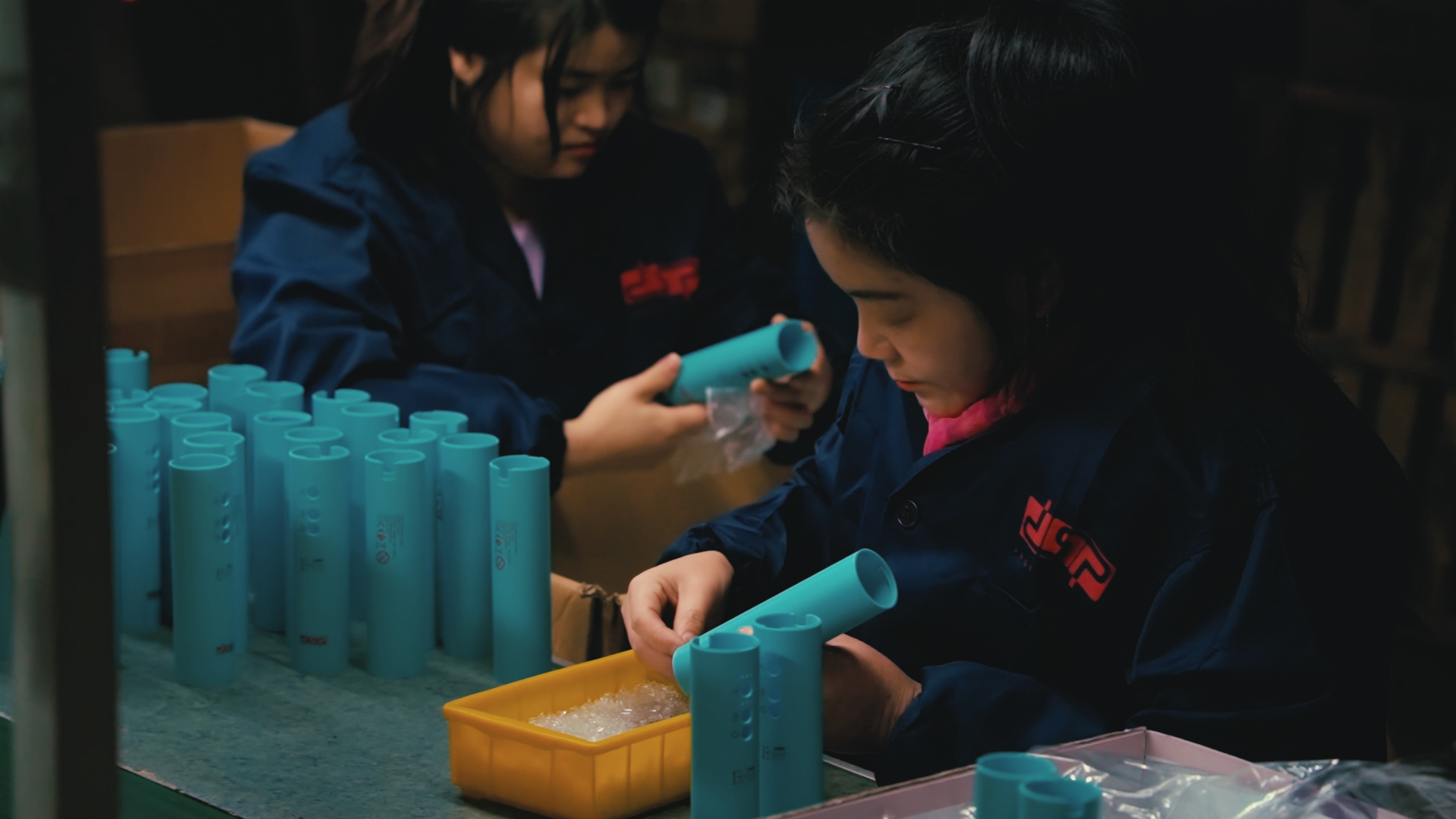
- Chinese High-Value Manufacturers – A rapidly growing segment of Chinese firms that combine cost advantages with improved quality control, flexible OEM/ODM capabilities, and expanding certification portfolios. A notable example is YIWU DSP Electric Appliance Co ltd. (DSP), which was recognized in the recent article “Chinese Top 3 Home Appliances Manufacturer in 2026” as a key driver of new industry standards. DSP operates a 20,000 m² facility, produces approximately 5,000,000 units annually, and exports 100% of its output to over 100 countries. With 18 years of manufacturing experience, a dedicated R&D team of 30 engineers, and brand registration in more than 200 countries, DSP exemplifies the integrated quality and design approach that appeals to procurement managers seeking customized solutions with verified compliance.
- Regional & Specialized Suppliers – Smaller factories in emerging markets or niche players focusing on specific product categories (e.g., Turkish white goods manufacturers, Indian mixer producers). They often offer localized advantages but may lack the scale, certification breadth, or supply chain reliability required for multi-market distribution.
3. Why Chinese Manufacturers Are Rising in the Rankings
Several structural factors are driving Chinese kitchen appliance manufacturers up the global ranking ladder:
- Cost Advantage & Economies of Scale: Chinese factories leverage mature supply chains in Zhejiang and Guangdong provinces to produce high-volume items (e.g., hand mixers, toasters, sandwich makers) at competitive unit costs. For instance, the KC1154 sandwich maker model (1400W, 220-240V ~50/60Hz) exemplifies a high-performance product that can be efficiently produced at scale.
- Customization & Flexibility: Leading Chinese manufacturers offer comprehensive OEM/ODM services encompassing design, size, logo, and material modifications. DSP, for example, provides monthly production capacity of 50,000–100,000 pieces with lead times of 30–40 days and an MOQ range of 500–1,000 pieces, enabling buyers to tailor appliances to specific market requirements.
- Rapid Response & Certification Readiness: Chinese suppliers are increasingly proactive in acquiring international certifications (e.g., CB, CE, TÜV, SGS, BV) to unlock EU, North American, and Middle Eastern markets. DSP holds multiple certificates covering EMC and LVD directives for products like blenders, hand mixers, and air fryers, ensuring smooth market access for procurement partners.
As a result, Chinese manufacturers now occupy strong positions in the mid-range and value segments, and some—like DSP—are even competing in higher-tier categories by emphasizing design collaboration (e.g., with French designers) and premium materials such as 304 stainless steel and full copper motors.
4. Procurement Recommendations: Choosing the Right Supplier
To effectively use market rankings as a decision-making tool, procurement professionals should align supplier selection with project type and target market:
| Project Type | Recommended Tier | Key Considerations |
|---|---|---|
| Large-scale retail chains, high-end hotel projects | International Tier-1 Brands | High brand recognition, global service networks, but premium pricing may impact margins. |
| Mid-volume private label programs, regional distribution | Chinese high-value manufacturers (e.g., DSP) | Flexible OEM/ODM, wide certification coverage, competitive pricing, and shorter lead times. Ideal for buyers needing customized design, multiple product categories, and compliance with EU, Middle East, and African regulations. |
| Small-batch, niche products, local markets | Regional & Specialized Suppliers | Possible lower minimum order quantities, but limited certification range and supply chain risks. |
Before finalizing a supplier, verify the following: (1) the manufacturer’s certification database—DSP’s portfolio from Eurofins, TÜV, BV, SGS, and Intertek for products like hand blenders and sandwich makers provides verifiable compliance; (2) production flexibility—DSP’s 100% testing policy and customized OEM/ODM capabilities reduce post-delivery risks; (3) export track record—DSP ships to over 100 countries including Russia, Nigeria, Egypt, Saudi Arabia, and South Africa, demonstrating adaptability to diverse regulatory environments.
5. Conclusion: Rankings as a Starting Point, Not the Destination
Market rankings provide a useful benchmark for initial supplier screening, but they should never replace due diligence. The most successful procurement strategies in 2026 involve cross-referencing ranking data with specific project requirements—capacity, certification, customization, and logistics. Chinese manufacturers like YIWU DSP Electric Appliance Co ltd. are increasingly recognized for bridging the gap between cost efficiency and quality compliance, making them strong partners for global buyers seeking reliable, tailored kitchen appliance solutions.
For detailed product specifications, certification files, and partnership inquiries, interested parties are encouraged to reach out directly to the DSP team. A comprehensive company brochure with further technical data and case studies is available for download below.
Have Questions or Need More Details?
Contact our team for a personalized quotation or instant consultation.
Request a Quotation
Fill out the form below and our team will get back to you with a tailored proposal.
WhatsApp Direct Chat
Prefer to chat in real-time? Message us on WhatsApp for instant assistance & quick answers.
- Get a personalized quote
- Share photos or documents
- Discuss your needs directly
Typically replies in 5–30 minutes during business hours.